Resting Meat: Why It Matters More Than You Think

I used to rush through cooking meat, not knowing how it affected my dishes. I now see the importance of resting meat and how it can improve cooking.
Resting meat allows the juices to redistribute, making the dish tender and flavorful. This simple trick is a big help for both home cooks and chefs.
In this article, we'll examine meat-cooking tips and the benefits of meat rest. We'll help you make your meals more delicious and satisfying.
Key Takeaways
- Resting meat improves the dish's tenderness and flavor.
- The technique is simple and easy to incorporate into your cooking routine.
- Resting meat allows the juices to redistribute, making the meat more palatable.
- This technique is beneficial for both home cooks and professional chefs.
- Resting meat is a crucial step in achieving a perfectly cooked meal.
The Science Behind Resting Meat: Why It Matters More Than You Think
https://www.youtube.com/watch?v=AaHbfrryeYA
Resting meat is a science that makes your dishes juicy and flavorful. When you cook meat, you're not just applying heat. You're starting a complex series of changes in the meat's structure. Resting meat lets these changes settle, making the meat tender and juicy.
What Actually Happens When You Rest Meat
When you cook meat, the proteins contract and tighten. This pushes juices to the surface. Resting the meat allows the proteins to relax and the juices to redistribute throughout the meat. This is key for optimal meat flavor and tenderness.
The Redistribution of Juices Explained
The juices spreading back through the meat is crucial for tenderness and flavor. As the meat rests, the juices that were pushed to the surface during cooking are pulled back into the meat. This makes it more succulent. It's very important for larger cuts of meat, where the difference between the dry surface and juicy interior is big if not rested right.
Temperature Equalization and Carryover Cooking
Resting meat also helps equalize temperature. It helps keep the internal and external temperatures of the meat more evenly balanced. This, along with carryover cooking, ensures the meat is cooked evenly without overcooking the outside. Carryover cooking occurs when meat continues to cook after it's removed from the heat, which is more common with larger cuts.
Practical Guide to Resting Different Types of Meat

To get the perfect doneness, knowing how to rest meat is key. Resting meat makes it tender and flavorful. We'll cover how to rest various meats for culinary success.
How Long to Rest Your Meat
The resting time varies by meat type and size. Larger cuts need longer rest times.
Small Cuts (Steaks, Chops, Chicken Breasts)
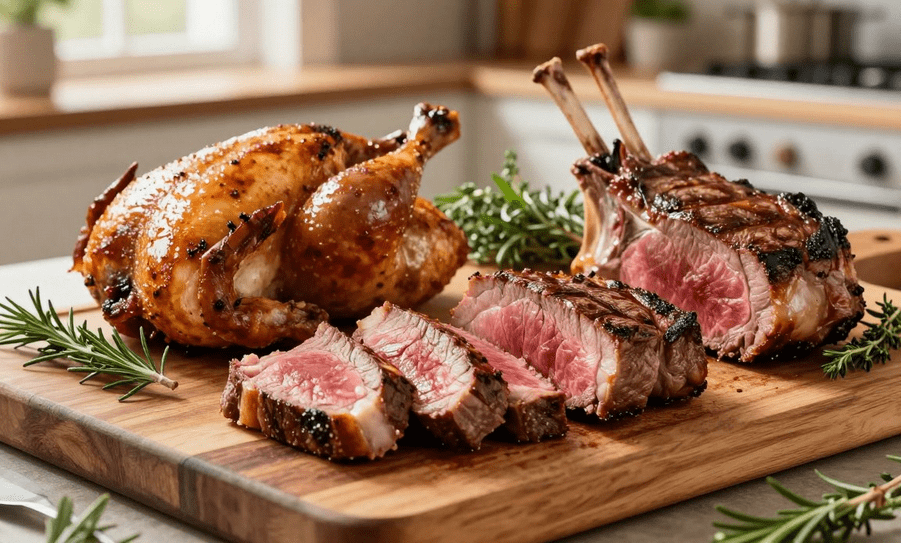
Small cuts like steaks and chicken breasts rest for 5 to 10 minutes. This lets juices spread without cooling too much. For example, a grilled ribeye steak should rest for 5 minutes to stay juicy.
Large Cuts (Roasts, Whole Poultry)
Large cuts, such as roasts, rest for 20 to 30 minutes. This ensures juices spread evenly. A roasted turkey benefits from a 30-minute rest, making it more tender.
Special Considerations for Different Meats
Each meat type has its own resting needs. Lamb and beef need a bit longer rest. Pork and chicken should rest less to stay warm.
Best Techniques for Resting Meat
Resting meat techniques greatly affect the outcome. Here are some top practices.
Tenting with Foil vs. Uncovered
Tenting with foil keeps meat warm and moist. But leaving it uncovered prevents steam buildup. Choose based on meat type and preference. For example, a foil tent is good for roasts, while steaks benefit from being uncovered.
Common Mistakes to Avoid
Not resting meat long enough reduces juiciness. Cutting too soon spills juices. Plan well to avoid these mistakes.
How to Tell When Your Meat is Properly Rested
To check whether the meat has rested, check its temperature and feel. It should be firm but soft. When cut, juices should flow evenly, indicating it has rested properly.
By following these tips and knowing meat-specific resting times, you'll improve your cooking. Your dishes will be more flavorful and tender for your guests.
Conclusion
Resting meat is more than just a step in cooking. It's a key technique that can make your dishes better. By letting the meat rest, the juices spread out, making it tender and flavorful.
The role of resting meat is huge. It's essential for a tender steak or a hearty roast. It ensures the juices are spread out evenly and the temperature is consistent.
Adding resting meat to your cooking can make your dishes top-notch. So, when you cook next, remember its importance. Let the meat rest to get the best results.
Understanding the science behind resting meat can greatly improve your cooking. Try it out and see the difference for yourself.
FAQ
Q: What is resting meat, and why is it important?
A: Resting meat means letting cooked meat sit before serving. This helps the juices distribute, making the meat tender and flavorful. It's key for the best flavor and texture.
Q: How long should I rest my meat?
A: Resting time depends on the meat's size and type. Small cuts, such as steaks, need 5-10 minutes. Larger pieces, such as roasts, require 15-30 minutes or more. I'll share more about specific times later.
Q: What happens if I don't rest my meat?
A: Not resting meat can make it dry and less tasty. This can ruin your meal. Resting keeps the meat juicy and tender.
Q: Should I cover my meat while it's resting?
A: Covering with foil can keep heat in but might make it steamy. I suggest covering loosely or not at all, based on the meat and your taste.
Q: How do I know if my meat is properly rested?
A: Rested meat feels firm but soft to the touch. Check by slicing; clear juices and even color mean it's rested right.
Q: Can I rest meat in the refrigerator?
A: No, resting meat should be at room temperature or warm. This helps the juices spread better.
Q: Does resting meat apply to all types of meat?
A: Resting is good for most meats, but some need special care. Delicate fish may not require it, but large cuts of beef or lamb do.
Q: Can I rest meat that's been cooked using different methods, like grilling or pan-searing?
A: Yes, resting works for all cooking methods. Let the meat rest after cooking, regardless of how it was cooked.
DISCLAIMER
This document is provided for general information purposes only and should not be relied upon as providing legal advice, technical, or specific operational guidance to the reader, whether as to the practices described in the document or the applicable legal requirements and regulations. outdoorgrillguide.com expressly disclaims any responsibility for liability arising from or related to the use or misuse of any information in this document.