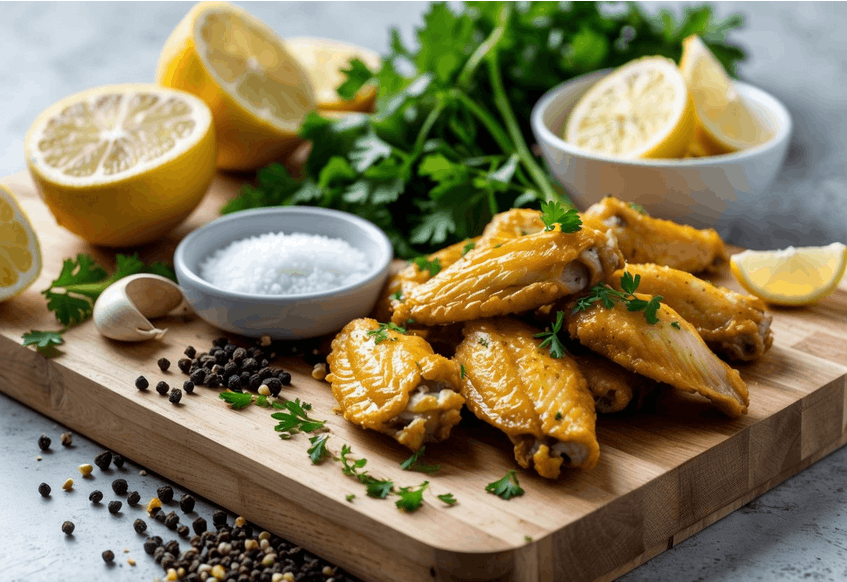
Lemon Pepper Chicken Wings: The Ultimate Recipe & Guide
You want wings that hit those bright lemon notes, pack a peppery punch, and stay crisp—without leaving a mess behind. Let me show you how to get that restaurant-style lemon pepper flavor at home using simple ingredients and easy methods you can actually trust.
You can make crispy, tangy lemon pepper wings in the oven, air fryer, or by frying, using just a few pantry staples and a quick toss in lemon butter or seasoning.
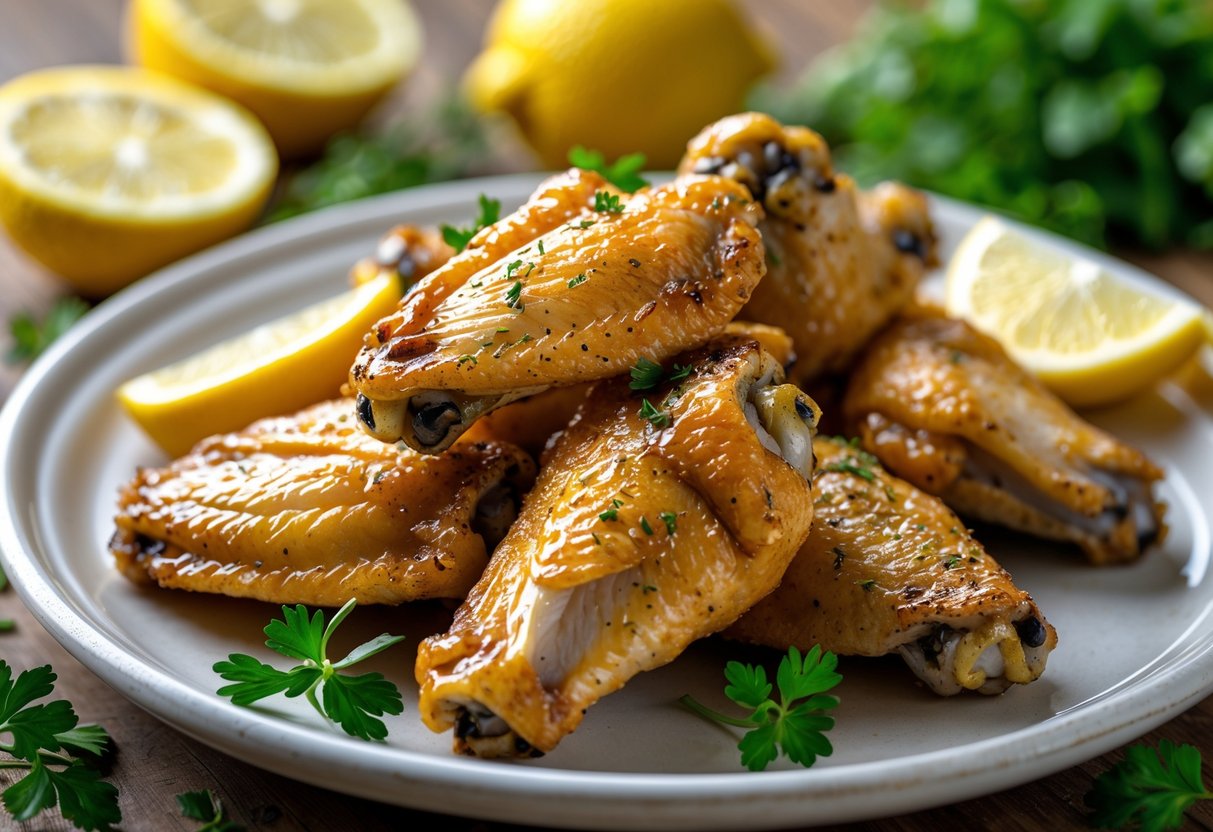
Follow my steps and tips so you waste less time and get better results. You’ll see which ingredients matter, how to keep the skin crisp, and how to finish wings for the best flavor.
Key Takeaways
- Learn a simple method for tangy, peppery wings at home.
- Use basic ingredients and the right cooking method for crisp skin.
- Get quick tips for serving, storing, and reheating without losing flavor.
What Are Lemon Pepper Chicken Wings?
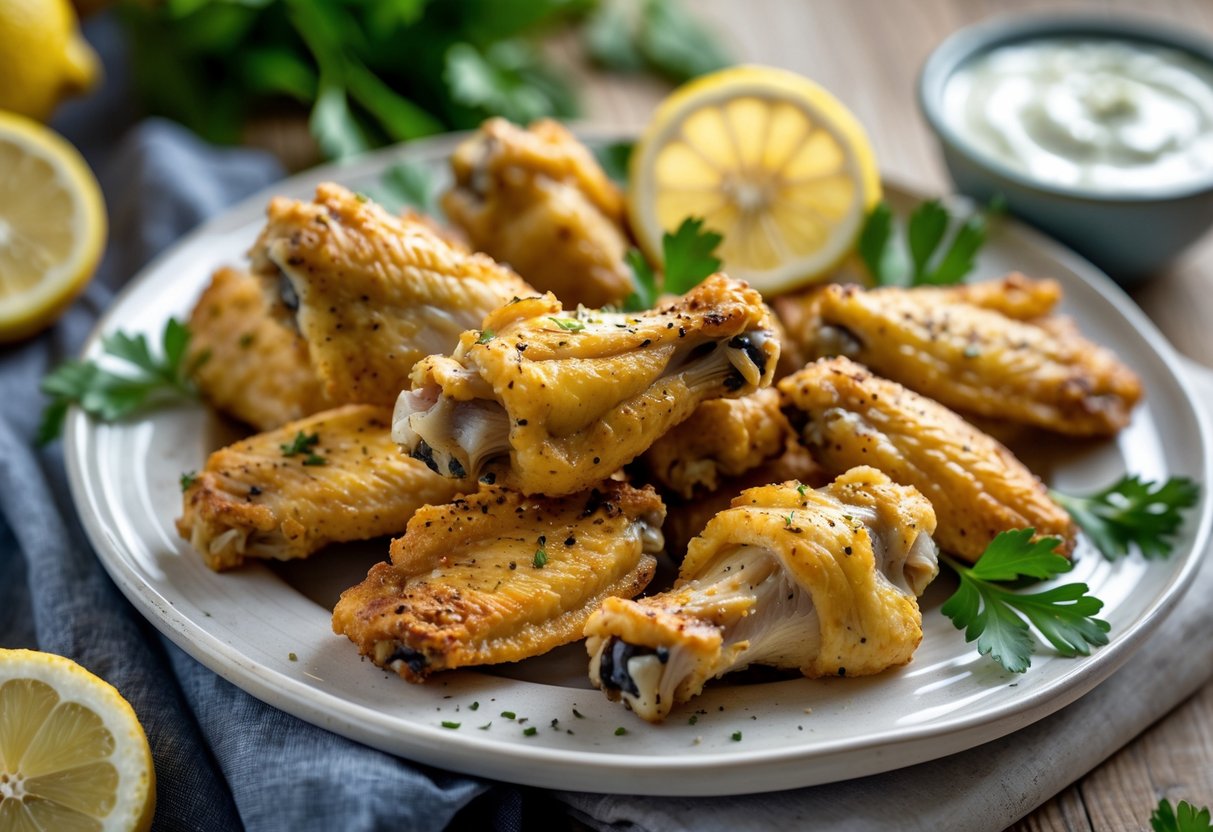
What makes these wings stand out? It’s the bright citrus, sharp cracked black pepper, and a crispy skin that really holds the seasoning. You can bake, air-fry, or fry them—they work as an appetizer or main for any casual meal.
Origins and Popularity
Lemon pepper wings started with simple flavor pairings that took off in American kitchens and restaurants in the late 20th century. Chefs and home cooks realized lemon zest and cracked black pepper could brighten up rich, fatty chicken.
Fast-casual chains and sports bars helped make this recipe a thing, offering a tangy alternative to buffalo or barbecue. Home cooks leaned into baking and air frying, which made the dish easier and less messy for weeknights.
Now, you’ll find lemon pepper seasoning sold everywhere, and it’s a top flavor for game-day menus and takeout orders.
Defining the Lemon Pepper Flavor
This flavor is all about balance: citrus brightness and peppery heat. Fresh lemon zest or juice brings acidity and aroma, while coarsely cracked black pepper adds bite.
Garlic powder, salt, and a little oil usually support those main notes. Texture’s just as important—crisp skin helps the lemon-pepper coating stick. Drying wings, adding baking powder or cornstarch, or using high heat all help get that crunch.
Some recipes finish with melted butter or a gremolata for richness and a fresh herb aroma, but the lemon-pepper profile still leads.
Why They're a Game Day Favorite
Lemon pepper wings are great for game day because the flavor is bold but not too much. The tang cuts through heavier snacks, and the pepper gives a warm kick that pairs well with beer and dips like ranch or blue cheese.
You can easily scale them for parties. Bake or air-fry big batches, keep them warm in the oven, and serve with lemon wedges and extra cracked pepper. A lot of people say lemon pepper wings feel lighter than saucy wings but still have that strong, familiar flavor.
Essential Ingredients for Lemon Pepper Wings
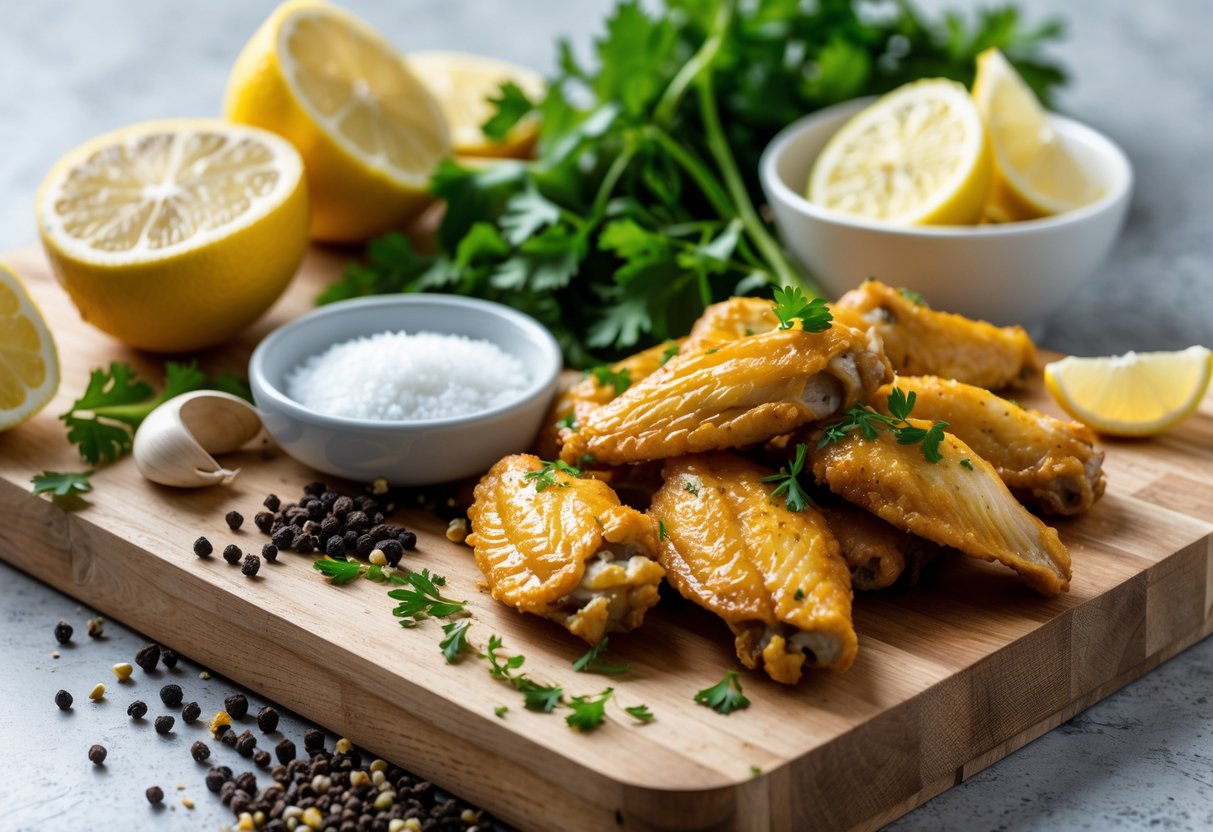
I focus on a handful of high-impact ingredients: good chicken pieces, bold lemon pepper seasoning, a buttery sauce or glaze, and little extras that lift the flavor. Every choice affects crispiness, tang, and balance.
Choosing the Right Chicken Wings
I buy fresh, evenly sized wings so they cook at the same speed. I like to buy whole wings and cut them into flats and drumettes for a mix of meat and skin textures. If you go for pre-cut, check that all the pieces are about the same size.
To help the skin crisp, I pat wings dry and toss them with a little baking powder—not soda. That helps browning without changing the flavor. I trim off excess skin or tips if they stick out and burn easily.
If I’m short on time, I use an air fryer at 400°F for about 22–26 minutes, flipping once. For oven baking, I go with 425°F on a wire rack so heat gets all around each wing.
Lemon Pepper Seasoning Explained
When I can, I make lemon pepper seasoning from fresh lemon zest and coarse black pepper. Fresh zest gives you those bright citrus oils that powdered lemon just can’t match.
I mix zest with coarse cracked black pepper and a pinch of salt for a balanced dry rub. The dry rub should cling to the skin, so I oil or butter the wings before coating. Store-bought blends are okay, but check the label if you want pure citrus-pepper flavor.
I like to finish wings with more fresh zest and cracked pepper right before serving. Lemon wedges on the table let everyone add more juice if they want extra brightness.
Butter, Sauces, and Oils
Butter is my go-to base for wing sauce because it carries flavor and helps seasoning stick. Melted butter plus lemon juice, zest, and black pepper makes a simple, tasty sauce that coats wings well.
If I want a lighter glaze, I swap in some olive oil. Sometimes I add a teaspoon of honey for a sticky, sweet balance. Garlic powder goes in for background savoriness without overpowering the lemon pepper vibe.
I always toss the wings while they’re hot so the sauce clings. For a crisp finish, I pop sauced wings back in the oven or air fryer for a couple minutes to set the glaze.
Additional Flavor Enhancers
Small extras can really elevate lemon pepper chicken. Garlic powder and a little onion powder add depth without hiding the lemon. A pinch of smoked paprika or cayenne gives optional warmth and color.
Fresh herbs like chopped parsley or thyme look good and add a mild herb note when sprinkled just before serving. Sometimes I put out lemon wedges and a lemon pepper dipping sauce for extra tang.
For texture, I serve wings with crunchy celery or carrot sticks and a creamy dip like ranch or blue cheese. These sides cool things down and play nicely with the peppery tang.
Step-by-Step: How to Make Lemon Pepper Chicken Wings
I’ll walk you through prepping the wings, making a simple lemon pepper blend, and the crisping method I use for baking or frying. Stick to the timing, temperatures, and order for the best texture and clear lemon-pepper flavor.
Preparing Chicken Wings
Start by trimming off any excess skin or tips and separate flats from drumettes if you need to. I brine wings in 4 cups water, 1/4 cup kosher salt, and 1/4 cup sugar for 4–12 hours to keep them juicy.
Rinse and pat them totally dry before coating. For baked wings, toss with 1–2 tbsp oil and 1 tsp cornstarch or baking powder per pound to help browning. Arrange them on a wire rack over a sheet pan so air circulates.
Bake at 425°F (218°C) for 35–45 minutes, flipping once, until the skin turns golden. For fried wings, heat oil to 360°F (182°C). Fry in small batches for 8–10 minutes until the internal temp hits 165°F (74°C) and the skin gets crisp.
Drain wings on a rack, not paper towels, to keep that crunch.
Homemade Lemon Pepper Seasoning
I mix fresh zest and dry spices for the brightest flavor. Try this:
- 2 tbsp lemon zest (finely grated)
- 1½ tbsp coarse black pepper (cracked)
- 1 tsp garlic powder
- 1 tsp onion powder
- 1 tsp fine sea salt
Dry the zest on low heat or in a warm oven for 5–7 minutes so it won’t clump. Mix everything and store in an airtight jar for up to two weeks. For more punch, add 1 tsp dried parsley or ½ tsp smoked paprika.
If you want a butter sauce instead of a dry rub, melt 4 tbsp unsalted butter, stir in 1 tbsp seasoning and 1 tbsp lemon juice, then toss wings quickly so they stay crisp.
Technique for Maximum Crispiness
Crisp skin comes down to a dry surface, heat, and spacing. Pat wings dry after brining and again before coating. For baked wings, use a wire rack and a hot oven (425°F). Baking powder helps by breaking down proteins and drawing out moisture—use 1 tsp per pound.
If you’re frying, keep the oil at 360°F and don’t crowd the pot. Fry in 2–3 inches of oil so hot oil can circulate. Drain on a rack and let them rest 3–5 minutes before seasoning.
Season wings right away. For dry-rub wings, toss while they’re still hot so the seasoning sticks. For buttered wings, toss just once to coat lightly and keep the crust intact.
Cooking Methods: Oven, Air Fryer, and More
Let’s talk about practical ways to cook lemon pepper wings so you can pick what fits your kitchen, time, and what kind of texture you want. Each method has its own temperature, timing, and little tricks to get wings crisp and well-seasoned.
Oven-Baked Lemon Pepper Wings
I bake wings at high heat for crunchy skin without deep frying. Preheat the oven to 450°F (230°C). Pat wings dry, then toss with baking powder and cornstarch (about 1 tbsp each per 1.5–2 lbs of wings) to help the skin crisp up.
Arrange wings on a wire rack over a rimmed baking sheet so hot air gets all around and oil drips away. Bake for 35–40 minutes, flipping once at the 20-minute mark for even browning.
Finish by tossing hot wings in a sauce of melted butter, lemon juice, and lemon pepper seasoning. I usually add lemon zest and parsley for a final burst of flavor.
Air Fryer Lemon Pepper Wings
I use the air fryer when I want fast, extra-crispy wings with less oil. Preheat the air fryer to 400°F (200°C). Dry the wings, then coat with 1 tbsp baking powder and 1 tbsp cornstarch per 1.5–2 lbs. Don’t overcrowd the basket—give them space for airflow.
Cook for about 20 minutes, shaking or flipping the wings once or twice. Check for 165°F (74°C) inside and deep golden skin. Toss wings right away in warm lemon-butter sauce and serve.
Air fryer instructions can vary by model, so you might need to shave a couple minutes off for small units or add a bit for big batches. Adjust as you go—no shame in peeking.
Fried Chicken Wings Variations
I deep-fry wings when I want that classic, extra-crispy texture and quick cook time. Heat oil to 350°F (180°C) in a deep fryer or heavy pot with 1½–2 inches of oil.
Lightly coat wings in seasoned flour—about 1 cup flour per 3 lbs wings, plus 1½ tsp salt and ½ tsp pepper. Fry in small batches for 6–7 minutes until the internal temp hits 165°F (74°C).
For a lighter fry, use a skillet with ¼–½ inch oil and turn wings to brown all sides. After frying, drain on a wire rack and toss with lemon pepper butter.
I’ll sometimes double-fry: first at 325°F for 5 minutes, let them rest, then fry at 375°F for 2–3 minutes for max crunch.
Smoked Wing Technique
Smoking wings gives a deep, savory flavor that pairs so well with citrus. Preheat the smoker to 225–250°F (107–121°C).
Pat wings dry and season with salt and lemon pepper. Arrange wings directly on the rack with space for smoke to move around.
Smoke for 45–60 minutes until the skin firms up and the internal temp reaches 165°F (74°C). For crispier skin, finish on a hot grill, in a 450°F oven for 5–8 minutes, or blast them in the air fryer at 400°F.
After smoking, toss wings in warm lemon-butter sauce to boost the citrus and keep that smoky flavor front and center.
Serving, Dipping, and Pairings
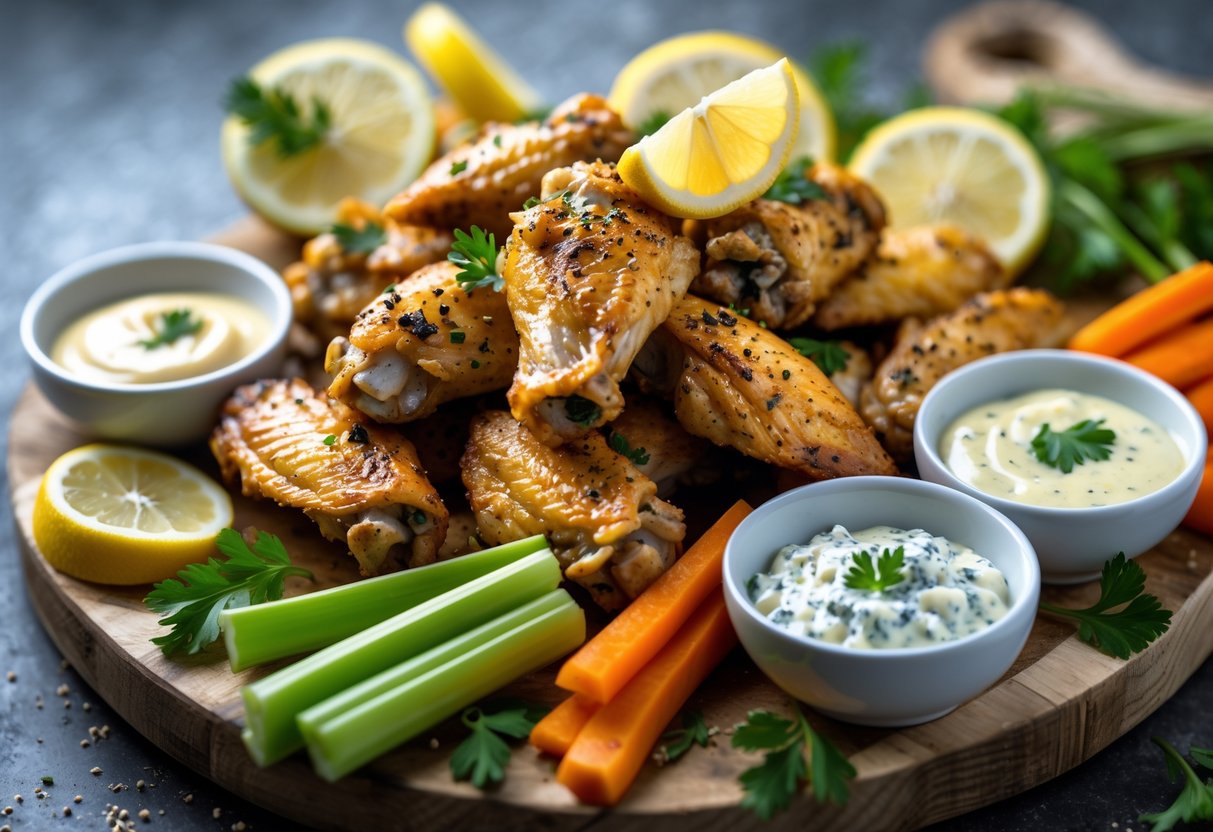
I try to plate wings so they look inviting and stay hot. Simple garnishes and at least two dips always make it better.
Sides should contrast in texture and flavor. That’s the key for a balanced plate.
Plating and Garnishing Tips
I spread wings in a single layer on a warmed platter to keep the bottoms crisp. Lemon wedges go around the edge—partly for color, partly for squeezing.
Chopped parsley or thin green onion slices add a pop of color and a mild herb note. Carrot and celery sticks go in a separate bowl or on one side of the platter for crunch and balance.
If I’m bringing wings to a party, I line a tray with parchment and use little ramekins for dips to avoid sogginess.
Classic and Creative Dipping Sauces
I always put out creamy ranch and tangy blue cheese. Both cut through the lemon pepper and add a cool, rich bite.
For extra variety, I’ll whip up a lemon pepper butter sauce—melted butter, lemon juice, and a pinch of lemon pepper. Spicy sriracha mayo (just mayo, sriracha, and some lime) is great for anyone who wants heat.
I label the sauces so guests know which is dairy-based or spicy. No one likes dip roulette.
Ideal Sides and Accompaniments
I go for crisp, cold sides to contrast the hot, oily wings. Carrot sticks, celery, and a crunchy slaw with cabbage and a light vinaigrette add freshness.
If I want something heartier, I serve roasted potato wedges or garlic fries. Extra lemon wedges and a dish of flaky salt let guests tweak brightness and seasoning.
For parties, pickles or a tray of sliced veggies round things out nicely.
Tips for Perfect Lemon Pepper Wings Every Time
I focus on drying the skin, hitting the right internal temperature, and using a good lemon butter sauce. Small steps—brining, picking the right cook method, and proper cutting—really change the texture and flavor.
Brining and Marinating Options
I use a simple dry brine or a quick wet brine depending on how much time I have. For dry brine, pat wings dry, sprinkle 1 tsp kosher salt per pound, and refrigerate uncovered on a rack for 4–12 hours.
This helps firm the skin and boosts flavor. For wet brine, dissolve 1/4 cup kosher salt and 1/4 cup sugar in 4 cups water, submerge wings, and refrigerate 2–4 hours. Rinse and pat them totally dry before cooking—otherwise, the skin steams instead of crisping.
If I want a stronger lemon note, I add 1 tsp lemon pepper seasoning to the dry brine or 1 tbsp lemon zest to the wet brine. I avoid long acid marinades—anything with lemon juice shouldn’t go more than an hour or the skin gets mushy.
Temperature and Doneness Checks
I always use a kitchen thermometer. Stick the probe into the thickest part without hitting bone.
For safe but juicy wings, aim for 165°F (74°C). If I want ultra-tender, gelatin-rich meat, I let wings go to 185–195°F (85–90°C) and watch the texture. That melts connective tissue and keeps them moist.
When baking or air frying, crank the heat to around 400°F (205°C) to render fat and crisp the skin. For frying, keep oil at 350–375°F (175–190°C).
I rest wings 3–5 minutes after cooking so juices settle. If wings sit long or get sauced, I recheck temps—sauce can hide undercooking.
Cutting Flats and Drumettes
I separate wings into flats and drumettes for even cooking and easier eating. Use a sharp knife or kitchen shears at the joint—feel for the joint with your fingers and cut through the membrane, not the bone.
Save wing tips for stock or just toss them. Drumettes are meatier and sometimes need a minute or two longer than flats, so I put them toward hotter parts of the oven or air fryer basket.
If sizes are all over the place, cook similar sizes together or cut big drumettes in half for even doneness. Properly cut wings make saucing and plating easier, too.
I sometimes toss flats and drumettes separately if I want different sauce coverage or crisp levels.
Common Mistakes to Avoid
I see the same issues pop up: wet skin, overcrowding, and saucing too early. Never put wet wings into the oven, fryer, or air fryer—pat them dry and use a dry brine to get rid of surface moisture.
Wet skin just steams and never crisps. Don’t crowd the pan or basket. Give wings space for air and oil to move around—cook in batches if you have to.
Overcrowding leads to uneven cooking and rubbery skin. And don’t toss wings with lemon butter sauce until they’re piping hot and ready to serve. Sauce cools the skin and makes it soggy, so keep sauce warm and toss right before plating.
Storing and Reheating Leftover Wings
I keep leftovers safe and crisp by cooling them fast, sealing them tight, and reheating with dry heat. Stick to simple timing, temp, and spacing rules to keep lemon pepper chicken wings tasty and safe.
Safe Storage Guidelines
I cool wings to room temp within 2 hours after cooking, then move them to the fridge. Airtight containers or heavy-duty resealable bags work best—push out as much air as you can.
I label containers with the date and use them in 3–4 days. For longer storage, freeze wings on a baking sheet until firm, then toss them in freezer bags and squeeze out extra air. They’ll keep for 2–3 months.
Thaw frozen wings overnight in the fridge before reheating. If there’s wet sauce, separate it before storing to keep the skin from getting soggy.
How to Reheat for Maximum Crispiness
I reheat wings in the oven or air fryer to bring back the crisp. For the oven, preheat to 375°F (190°C), put wings on a wire rack over a baking sheet, and heat 10–15 minutes until the internal temp hits 165°F (74°C).
Flip once for even browning. In the air fryer, set it to 350°F (175°C) and cook wings in a single layer for 5–8 minutes—check at 4 minutes.
I skip the microwave for whole wings because it makes the skin soggy. If wings have sauce, reheat them plain first, then toss in sauce after so the coating stays bright and crisp.
Frequently Asked Questions
I cover crisping methods, oven and air-fryer times, where to find famous lemon pepper wings, what makes the seasoning pop, key ingredients, and mistakes to dodge. Check each answer for clear, practical steps you can try right away.
How do I achieve crispy lemon pepper chicken wings when baking them in the oven?
Pat wings very dry with paper towels to get rid of surface moisture—dry skin browns and crisps way better in high heat.
Toss wings with a little baking powder, kosher salt, and black pepper before baking. The baking powder helps the skin blister and get crunchy without frying.
Use a wire rack over a foil-lined baking sheet so hot air moves under and around each wing. Bake at 425–450°F and flip once or twice for even browning.
What is the optimal cooking time and temperature for lemon pepper chicken wings in an air fryer?
Preheat the air fryer to 400°F (200°C). A hot basket helps the skin render fat and crisp up fast.
Cook wings in a single layer for about 18–22 minutes, flipping halfway. Check for an internal temp of 165°F (74°C) and add a couple minutes if you want extra crunch.
Which city is famous for its lemon pepper chicken wings, and where can I find them?
Chicago’s known for lemon pepper wings, usually served dry (just seasoned) instead of sauced. Lots of local wing shops and sports bars there offer lemon pepper on the menu.
Look for family-run wing joints and neighborhood taverns in Chicago—they tend to have the most authentic, top-rated versions.
What is the secret to the best-tasting lemon pepper seasoning for wings?
Use fresh lemon zest if you can for a brighter, cleaner citrus flavor. Dried powders lose their punch and taste kinda flat.
Mix coarse black pepper with kosher salt, garlic powder, and a little onion powder. If you like a hint of sweetness, add a bit of sugar or honey to the sauce.
What are the essential ingredients needed for making homemade lemon pepper chicken wings?
Start with wings, kosher salt, and coarsely ground black pepper for the basic seasoning.
Fresh lemon zest and juice add real citrus bite. Butter or olive oil helps seasonings stick and carries flavor, while garlic and onion powder round out the savory side.
What common mistakes should I avoid when preparing lemon pepper wings at home?
Don’t skip drying the wings. Wet skin just steams and turns out soft, not crispy.
If you forget the baking powder or don’t preheat the oven enough, the wings won’t crisp up right. It’s worth the extra minute or two.
Try not to crowd the pan or air-fryer basket. When wings overlap, they trap steam and end up soggy.
Wait to add the lemon sauce until the very end. Toss the hot wings with sauce right before serving so they actually stay crisp.