Winter Grilling Safety Tips: Snow, Ice, and Carbon Monoxide Risks
This guide helps U.S. cooks handle cold weather cooking safely. It covers three main hazards: slick footing, altered heat behavior, and poisonous gas buildup in enclosed spaces. Read on for clear, practical steps you can take before you fire up the grill.

Expect the season to change how your grill performs. Plan for longer preheat times, higher fuel use, and steady monitoring with a thermometer. Choose a wide, ventilated spot and clear ice or packed snow from the work zone.
Never operate a grill inside a garage, shed, tent, or other enclosed space. Poor ventilation can let dangerous gases build quickly and without warning. Stay alert, wear snug clothing, use good lighting, and inspect the appliance before each use.
Key Takeaways
- Grill only in open, well-ventilated areas to prevent gas buildup.
- Expect longer preheat and higher fuel use in cold conditions.
- Clear walking and cooking surfaces to reduce slip hazards.
- Use thermometers and steady monitoring for consistent heat.
- Wear fitted clothing and maintain bright, reliable lighting.
Why Winter Grilling Requires a Different Safety Mindset
Low temperatures and brisk winds force a different approach to prep, fuel, and movement when you cook outside. Cold outdoor conditions change how a grill heats, how long it runs, and how people move around the space.

How cold weather, wind, and shorter daylight change your risk level
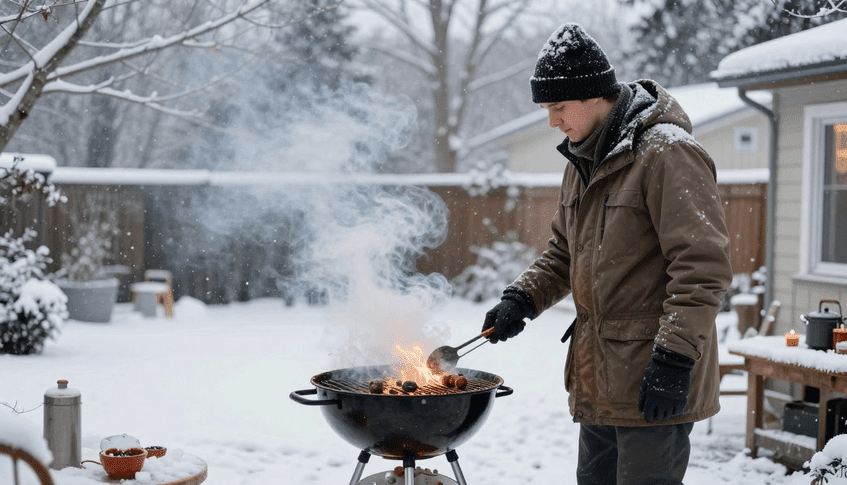
Cold air and gusts strip heat from the cook box. That makes the grill work harder and can tempt someone to move the unit closer to a house or under a cover for comfort. Those choices raise serious risk and must be avoided.
Shorter daylight means more cooks happen in low light. Poor visibility increases trips, missed flare-ups, and undercooked food if thermometers and lighting aren’t used.
Common challenges: heat loss, extra fuel use, and slippery surfaces
Lower ambient temperatures extend warm-up and recovery after opening the lid. Allow an extra 10–15 minutes for preheating and expect longer total cook time.
Plan for higher fuel consumption—often 25–50% more charcoal or more propane—so you don’t risk mid-cook relighting or unsafe shortcuts. Treat slippery walkways as a core safety concern; carrying hot tools on icy ground greatly increases injury risk.
Control the process: mitigate wind, allow extra time, stock extra fuel, and build a safer workflow from setup to shutdown.
Choose a Safe, Ventilated Grilling Location in Winter Weather
Positioning matters more in cold conditions because airflow, nearby structures, and lighting change risk quickly.
Pick a spot that gives open airflow on all sides and keeps exhaust from collecting under eaves or rooflines.

Maintain safe distance from structures, eaves, and covered areas
Keep the grill about 10 feet away from your home, garages, and any overhangs. That distance helps prevent heat or smoke from reaching vents and windows.
Never use enclosed spaces
Do not operate a grill in a garage, shed, tent, or any semi-enclosed space. Carbon monoxide can build up fast and is invisible and deadly.
Set up on stable, low-slip surfaces
Choose a cleared patio, deck, or other stable area. Uneven, snowy yards increase fall risk and can tip the appliance.
Plan for early darkness with proper outdoor lighting
Use outdoor-rated magnetic grill lights, headlamps, or battery-powered lanterns. Keep cords away from walkways so they don’t become trip hazards during a power outage.
- Checklist: fully outdoors, open airflow, exhaust clear of eaves and rooflines.
- Distance: aim for ~10 feet from structures and avoid covered patios.
- Backup power: carry battery lights or headlamps when storms threaten power.
Snow and Ice Prep to Prevent Slips, Falls, and Fire Hazards
Start by making every step from the door to the cook zone stable and slip-free. Clearing and treating the path reduces falls while carrying hot food or tools. A safe approach lowers both fall and burn hazards.
Shovel and de-ice before you start
Pre-cook routine: shovel the grilling area plus the full walking path from the door to the grill. Apply an appropriate de-icer or sand for traction before you carry anything outside.
Footwear and traction strategies
Wear insulated boots with aggressive tread or add traction cleats for better grip. Avoid smooth-soled shoes that can turn a short trip into a serious fall.
Keep loose snow and clutter away from the heat zone
Push snowbanks and loose snow well back from the grill so melting and refreezing do not form hidden sheets of ice. Keep drifting snow clear of hot surfaces to prevent contact with heat sources.
Safe movement on icy surfaces
Take short steps, shuffle to keep balance, and use railings on stairs. Make two trips instead of one so your hands stay free when possible. This reduces the chance of dropping hot items or knocking the grill over.
- Stage tools and food on a dry, stable table near the grill — not on snowy railings.
- Make sure the grill legs sit on solid ground, the lid opens freely, and the route back indoors stays clear before lighting.
Winter-Proof Your Grill Before You Light It
A full pre-use check keeps gear reliable and reduces rushed fixes while it's cold. Take a few deliberate steps to cut flare-ups, avoid mid-cook refueling, and protect equipment between uses.
Clean buildup, ash, and debris to reduce flare-ups
Remove grease and old ash from the cooking area and firebox before you start. Grease traps and ash pockets can hide hot spots that flare unpredictably when wind gusts hit.
Inspect hoses, fittings, and burners on gas models
Check for cracked hoses, loose fittings, and clogged burners. Replace cracked lines and tighten loose connections to prevent uneven flames or delayed ignition.
Stock extra fuel and keep it dry
Cold weather increases fuel demand. Plan for extra propane, charcoal, or wood so you don’t run out mid-cook.
Store charcoal and wood in a dry shed or sealed bin so they light predictably the next time you cook this season.
Protect gear between cooks
Let the unit cool fully, then use a durable cover to keep snow and ice from collecting in vents and on burners. Regularly deep-clean the grill once per year and do quick checks before each use.
"Prepare tools, fuel, and lighting first so you aren’t improvising with cold hands once flames are active."
- Quick checklist: clean, inspect hoses, stock fuel, cover when cool.
- Make sure legs and lid move freely before lighting.
Manage Heat and Cooking Times in Cold, Windy Conditions
When air is cold and wind is present, maintaining consistent grill temperature becomes the top priority. Small steps before and during a cook keep heat steady and food safe in harsh conditions.
Preheat longer and keep the lid closed
Add 10–15 minutes to your usual preheat so grates and the cook chamber reach true serving temperature. That reduces sticking and shortens overall times.
Practice "lid discipline": batch tasks and open the lid only briefly to avoid big heat drops.
Use windbreaks and smart positioning
Place the grill with vents facing away from prevailing wind to limit gust-driven swings.
Use a non-flammable windbreak at a safe distance to block direct gusts while keeping airflow open. Do not create an enclosed pocket that traps smoke.
Plan for higher fuel use and rely on thermometers
Stage extra propane or a full extra chimney of charcoal—expect 25–50% more charcoal in cold conditions so you don't run low mid-cook.
Trust thermometers over timing alone: use a grill thermometer for ambient temp and an instant-read for internal doneness. Stable temperatures mean safer poultry, burgers, and larger cuts.
"Keep the lid closed, monitor temps, and plan fuel so cold weather doesn't force risky shortcuts."
Winter Grilling Safety Tips: Snow, Ice, and Carbon Monoxide Risks
Fuel-burning appliances produce an invisible gas that can build up quickly in confined spaces. It is colorless and odorless, so people cannot rely on senses to detect it. When grills or heaters run too close to a house or under a tent, exhaust can drift into living areas and collect.
How exposure happens and common scenarios
Plain terms: any time fuel burns it creates carbon and monoxide together; that mixture can become dangerous if ventilation is poor.
Common winter scenarios include moving equipment into a garage "for a minute," using a shelter to block wind, or placing a unit near doors and windows so exhaust enters the home.
Recognize symptoms and act fast
Watch for headache, dizziness, weakness, nausea or vomiting, chest pain, and confusion. These signs can mimic the flu, which makes prompt action critical.
"If you suspect poisoning, stop cooking, move everyone to fresh air, and call 911 if someone is unconscious."
Gear and fire basics for cold conditions
Use insulated, heat-resistant gloves and snug, non-flammable outer layers to control tools and stay warm while reducing burn risk.
Keep the area clear of loose snow and combustibles, secure lighting like battery headlamps or magnetic grill lights, and maintain traction footwear so you can move confidently without slipping.
Prevention at home and outage readiness
Install carbon monoxide detectors on every level and near sleeping areas. Test monthly, change batteries regularly, and replace units per manufacturer guidance.
Plan for power loss: keep battery lights and extra power so you never feel forced to move equipment into an unsafe space to see better.
Conclusion
Close the plan with a final check before you light the fuel. Confirm open airflow, firm footing, clear paths, bright lighting, plus staged spare fuel so you will not improvise mid-cook.
Make sure the grill stays outdoors and well away from the home and any enclosed areas; this reduces gas buildup and lowers fire chance.
Expect colder weather to extend preheat times, raise energy use, and shorten daylight. Use reliable thermometers, control draft with safe windbreaks, then trust steady temps for both quality and safe internal cooking.
Make sure lighting, traction, and extra fuel are ready before you begin. With this checklist mindset you can enjoy the season while keeping procedures under control.
FAQ
How does cold weather change grilling risks?
Cold air, wind, and shorter daylight make it harder to keep stable heat and to see hazards. Wind can blow flames or cooling air over the grill, increasing fuel use and the chance of undercooked food. Reduced daylight and icy surfaces raise the risk of slips, trips, and accidental contact with hot surfaces.
Can I grill under a covered porch or inside a garage when it’s snowy?
No. Operating a grill in garages, sheds, tents, or under low eaves risks deadly carbon monoxide buildup and increases fire danger. Always place the unit in an open, well-ventilated outdoor area at least three feet from structures and overhangs.
What should I do to prepare the grilling area when there’s snow or ice?
Clear snow and ice from the grill zone, walkways, and steps before cooking. Use de-icer or sand for traction, move snowbanks and loose piles away from the heat zone, and keep the work area free of clutter so you can move safely while carrying food and tools.
What footwear and traction tips reduce slip risk on icy surfaces?
Wear insulated boots with non-slip soles or add traction cleats. Take shorter steps, bend your knees slightly, and keep one hand free for balance. Avoid carrying large or heavy trays that block your view of the path.
How often should I inspect my gas grill before winter cooks?
Inspect hoses, fittings, burners, and valves before each season and after heavy storms. Look for cracks, rust, blockages, and leaks. Perform a soap-bubble leak test on propane connections and replace damaged parts before use.
Is there special fuel planning needed for cold-weather cooking?
Yes. Cold and wind increase fuel consumption. Keep extra propane tanks full and store charcoal or wood in a dry place. Allow for longer preheat times and plan additional fuel so you don’t run low mid-cook.
How do I maintain grill temperature in windy or cold conditions?
Preheat longer, keep the lid closed as much as possible, and use the vents and dampers to stabilize heat. Position the grill with a windbreak behind it (not attached) or use a freestanding shield to reduce drafts without blocking ventilation.
Should I change cooking times or methods in low temperatures?
Yes. Food may take longer to reach safe internal temperatures. Use a reliable instant-read or probe thermometer instead of relying on usual timing. Consider indirect heat methods for larger cuts to avoid burning the exterior while the interior cooks.
What are early signs of carbon monoxide exposure while grilling outdoors?
Early symptoms include headache, dizziness, nausea, confusion, and shortness of breath. If anyone feels these signs, move them to fresh air immediately, call 911 if symptoms are severe, and seek medical attention. Do not assume fresh snow eliminates CO risk in poorly ventilated settings.
What protective gear helps prevent burns and cold-related problems?
Use heat-resistant gloves rated for grill work, long-handled tools, and a windproof insulated jacket. Wear a hat and layered clothing for warmth, but avoid loose sleeves that could catch fire. Keep a fire extinguisher and a metal lid or baking sheet nearby to smother flare-ups.
How do I reduce flare-ups caused by grease when grills are colder?
Clean grease and ash regularly to reduce flare-ups. Trim excess fat from meats, use drip pans for fatty cuts, and keep a spray bottle of water for small flare-ups. For charcoal grills, remove excess ash to maintain proper airflow and heat control.
Can winter weather affect propane performance?
Yes. Propane pressure drops in cold temperatures, which can reduce flame strength. Store spare tanks in a cool, upright position outdoors (not in a garage), and consider using a larger tank or multiple tanks to avoid low-pressure issues during long cooks.
Are there fire-safety steps unique to cooking in snow and ice?
Clear combustible materials and dry debris from around the grill, maintain a safe distance from snowbanks that may contain hidden combustibles, and place the unit on a stable, non-flammable surface. Never leave the grill unattended; melting snow can shift placement and create hazards.
How should I light a grill safely in windy conditions?
Follow the manufacturer’s lighting instructions. Shield the ignition point from direct wind with a windbreak that doesn’t enclose the grill. For gas units, open the lid before lighting if the burner was off. For charcoal, use approved starters rather than lighter fluid when possible.
What emergency actions should I take for suspected carbon monoxide poisoning?
Move anyone affected to fresh air immediately and call 911 if symptoms are severe. If you can do so safely, turn off combustion appliances and get people out of the area. Seek medical evaluation even for mild symptoms, as CO can cause delayed or worsening effects.
DISCLAIMER
This document is provided for general information purposes only and should not be relied upon as providing legal advice, technical, or specific operational guidance to the reader, whether as to the practices described in the document or the applicable legal requirements and regulations. outdoorgrillguide.com expressly disclaims any responsibility for liability arising from or related to the use or misuse of any information in this document.