Burgers 101: Smash Burgers vs Thick Burgers

I love burgers and have always been curious about the different ways to make them. Two popular methods are smash burgers and thick burgers. These two differ in texture and taste.
Smash burgers are famous for their crispy edges and sweet flavor. This comes from the Maillard reaction. Thick burgers, on the other hand, have a juicier patty. This makes them a hit with many burger fans.
In this article, we'll explore both styles. We'll compare their cooking methods and features. This will help you pick the best burger type for you.
Key Takeaways
- Smash burgers have a crisp-edged texture and caramelized flavor.
- Thick burgers offer a juicier patty.
- The Maillard reaction plays a key role in smash burgers' flavor.
- Cooking techniques differ between smash and thick burgers.
- Understanding the differences can help you choose the best burger type.
The Burger Basics: What Makes a Great Burger
To make a burger truly great, focus on the basics: meat quality, fat content, and cooking temperature. A great burger is a mix of flavors and textures that work together perfectly.
The Importance of Quality Meat
High-quality meat is key to a fantastic burger. The type of beef used greatly affects the burger's taste and texture.
Choosing the Right Beef Blend
It's important to pick the right beef blend. A mix of chuck, brisket, and short rib offers great flavor and texture. Look for a blend that balances lean meat and fat well.
Fresh vs. Frozen Meat Considerations
Fresh meat is often preferred, but frozen meat can be just as good if done right. The key is to freeze the meat correctly to keep its quality.
Fat Content and Flavor
The fat in meat is crucial for flavor and juiciness. Finding the right balance between fat and lean meat is essential.
The 80/20 Rule Explained
The 80/20 rule, with 80% lean meat and 20% fat, is a popular choice. It offers a great balance of taste and juiciness.
How Fat Affects Texture
Fat adds flavor and affects the burger's texture. More fat makes the burger tender and juicy.
The Role of Temperature in Burger Cooking
Temperature control is crucial when cooking burgers. It ensures the burger is cooked just right without overcooking the outside.
Meat Temperature Before Cooking
Letting the meat warm up to room temperature before cooking helps it cook evenly. This simple step can greatly improve the final burger.
Heat Levels for Different Methods
Different cooking methods, like grilling or pan-frying, need different heat levels. Knowing these differences is key to cooking the perfect burger.
Burgers 101: Smash Burgers vs Thick Burgers - Understanding the Difference

Smash burgers and thick burgers are two popular burger styles. Knowing the differences helps you pick the right burger for your taste.
The Philosophy Behind Each Style
Smash burgers aim for a crispy outside and a juicy inside. They're made by smashing the patty on the grill. Thick burgers, on the other hand, focus on keeping the patty juicy. They're formed gently to avoid compacting the meat.
Texture and Flavor Profiles
Smash burgers and thick burgers have different textures and flavors. Smash burgers are known for their crust development, which adds flavor. Thick burgers are loved for their juiciness.
Crust Development in Smash Burgers
Smash burgers get their crust from the Maillard reaction. This chemical reaction between amino acids and sugars creates a rich, savory taste.
Juiciness Factor in Thick Burgers
Thick burgers stay juicy because of their thickness and cooking method. This results in a patty that's evenly cooked and moist.
When to Choose Each Style
Choosing between smash burgers and thick burgers depends on what you like. Here are some tips:
- For a burger with a crispy crust and complex flavors, go for a smash burger.
- If you want a juicy, evenly cooked burger, choose a thick burger.
Mastering the Smash Burger Technique
Making the perfect smash burger needs quality ingredients, the right tools, and technique. This method is loved for its crispy edges and juicy centers.
Essential Equipment for Smash Burgers
To create smash burgers, you need specific tools. A griddle or flat-top grill and a spatula are key.
Choosing the Right Spatula and Press
A heavy-duty spatula is crucial for smashing and flipping burgers. Some prefer a burger press for even cooking and sear marks.
The Perfect Cooking Surface
A griddle or cast-iron skillet is best for smash burgers. They retain heat well and cook evenly, making them perfect for a sear.
Step-by-Step Smashing Process
The smashing technique has a few steps that need practice to get right.
Forming the Initial Ball
Begin by gently shaping a meatball. The size depends on your burger preference.
The Smashing Technique
Put the meatball on a hot griddle and smash it down with your spatula or press. Press evenly to cook the patty well.
Timing the Flip Perfectly
Wait for the edges to sear and the surface to cook halfway before flipping. Use your spatula to flip the burger and cook the other side.
Common Mistakes to Avoid
Don't make common errors like failing to preheat the griddle, pressing too hard, or flipping too much. These mistakes can ruin the perfect smash burger.
Perfecting the Thick Burger Method

Many people aim to make the perfect thick burger. It's not just about throwing meat on a grill. You need to think about how you form the patty, the cooking temperature, and how to keep it juicy.
Forming the Perfect Thick Patty
Creating the perfect thick patty is key. You should handle the meat lightly to avoid making it dense. This helps keep the burger juicy.
Handling the Meat Minimally
It's important to shape the patties gently. This keeps them tender and juicy. Just enough handling is needed to form a solid patty.
Achieving the Ideal Thickness
Go for a patty that's 3/4 to 1 inch thick. This thickness helps get a nice char on the outside while keeping the inside juicy. Achieving the right thickness is key to a perfect thick burger.
Cooking Temperatures and Times
Cooking temperatures and times are crucial for a juicy thick burger. The cooking method, whether direct or indirect heat, greatly affects the burger's taste and texture.
Direct vs. Indirect Heat Methods
Direct heat sears the burger quickly, adding flavor. But indirect heat cooks it more evenly. This ensures it's cooked right without burning the outside.
Using a Meat Thermometer Effectively
A meat thermometer is essential for safe cooking. For medium-rare, aim for 130°F to 135°F. Using a thermometer takes the guesswork out of cooking burgers.
The Dimple Technique and Why It Matters
The dimple technique involves making a small dent in the patty's center. It helps the burger cook evenly and prevents it from puffing up too much. This ensures a consistent texture.
Battle of the Burgers: Pros and Cons
The world of burgers is split between smash burgers and thick burgers. Each has its own good points and downsides when it comes to taste, texture, and how easy they are to make.
Smash Burger Advantages and Limitations
Smash burgers cook fast and get a crispy crust. This happens because the patty is pressed onto the grill. This method boosts the Maillard reaction, giving a deep, savory taste.
Speed and Convenience Factors
Because they're thin, smash burgers cook quickly. This makes them perfect for fast food places or when you're in a hurry.
Flavor Development Considerations
The smashing process increases the patty's contact with the grill. This leads to a richer flavor. But, it can also make the burger less juicy if not done right.
Thick Burger Strengths and Weaknesses
Thick burgers, by contrast, have a juicier patty and are more flexible when cooking. They can be cooked to different temperatures, pleasing various tastes.
Temperature Control Challenges
One big challenge with thick burgers is making sure they're cooked evenly. It's important to control the temperature well to prevent the outside from getting too hot before the inside is done.
Customization Possibilities
Thick burgers are great for adding your own toppings and sauces. This lets you make your burger just how you like it, which is a big plus for those who enjoy trying new flavors.
Elevating Your Burger Game: Toppings and Variations
Great burgers start with quality ingredients. But, the right toppings and variations can make them even better. Whether you prefer smash burgers or thick burgers, the right toppings can elevate your burger game.
Best Toppings for Smash Burgers
Smash burgers are best with toppings that match their crispy texture.
Classic American-Style Options
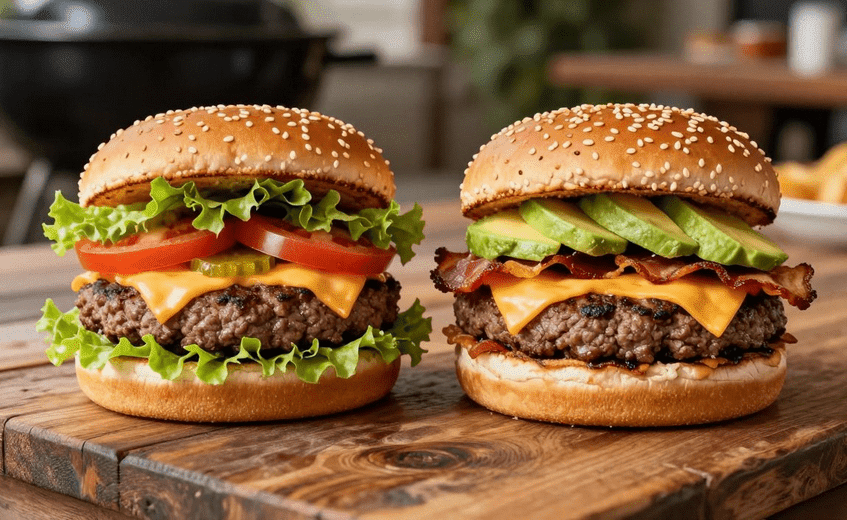
For a classic taste, add American cheese, lettuce, tomato, onion, and pickles to your smash burger.
Complementing the Crispy Texture
For a crispy texture, try crispy bacon or caramelized onions on your smash burger.
Ideal Accompaniments for Thick Burgers
Thick burgers can handle more robust toppings.
Robust Toppings for Juicy Patties
Pair thick burgers with grilled mushrooms, BBQ sauce, or jalapeños for extra flavor.
Creating Balanced Flavor Profiles
To balance flavors, mix and match toppings. Try blue cheese with caramelized onions.
Bun Selection and Preparation
The bun is as important as the patty and toppings.
Toasting Techniques
Toasting the bun improves texture. Try grilling it lightly or toasting it in a toaster.
Matching Bun Size to Burger Style
Choose a bun size that matches your burger. A larger bun for thick burgers and a standard bun for smash burgers.
Conclusion: Finding Your Perfect Burger Style
Knowing the difference between smash burgers and thick burgers is crucial. It helps you find your favorite burger style. By learning how to cook each type, you can try different patties to make the best burgers for you.
Do you love the crispy crust and caramelized taste of smash burgers? Or do you prefer the juicy, even patty of thick burgers? The right cooking methods can make your burgers even better. Try different toppings and condiments with each burger type to find your perfect match.
Exploring burgers is all about finding what you like best. By understanding each style and trying new cooking methods, you'll make delicious burgers. These burgers will surely impress anyone who tries them.
FAQ
What is the main difference between smash burgers and thick burgers?
Smash burgers are made by smashing meat on a hot griddle, creating a crispy crust. Thick burgers are formed into a thicker patty. They are cooked to stay juicy.
What type of beef is best for making burgers?
A beef blend with about 20% fat is best. It makes juicy and flavorful burgers.
How do I achieve the perfect sear on a smash burger?
Use a hot griddle and smash the meat firmly. Please don't move the patty until it's time to flip.
What is the dimple technique in burger making?
The dimple technique creates a small indentation in the patty's center. It prevents the patty from puffing up too much.
Can I use the same toppings for both smash burgers and thick burgers?
Some toppings work for both. But smash burgers do better with lighter toppings. Thick burgers can handle more.
How do I choose the right bun for my burger?
Pick a bun that matches your burger's style. Smash burgers go well with soft buns. Thick burgers need heartier buns.
What is the ideal internal temperature for a cooked burger?
The ideal temperature is at least 130°F for medium-rare. It's 140°F for medium and 160°F for well-done.
How can I prevent my burgers from becoming too dense?
Handle the meat gently and avoid overworking it. Use the right cooking techniques to prevent density.
Can I make gourmet burgers at home?
Yes, you can. Try different patty styles, toppings, and cooking methods to make gourmet burgers at home.
What are some common mistakes to avoid when making smash burgers?
Avoid not using enough heat and not smashing the meat firmly. Also, don't move the patty too soon.
DISCLAIMER
This document is provided for general information purposes only and should not be relied upon as providing legal advice, technical, or specific operational guidance to the reader, whether as to the practices described in the document or the applicable legal requirements and regulations. outdoorgrillguide.com expressly disclaims any responsibility for liability arising from or related to the use or misuse of any information in this document.