Electric Grill Options for Apartment Balconies: Safe, Compact, and High-Performance Choices
You want a grill that fits rules, space, and smoke limits while still giving good flavor. Electric grills for balconies solve that by offering low smoke, compact footprints, and easy cleanup so you can grill safely without bothering neighbors or breaking building rules.
Pick an electric model that matches your balcony size and local rules, and you’ll get reliable heat, minimal smoke, and simple maintenance.
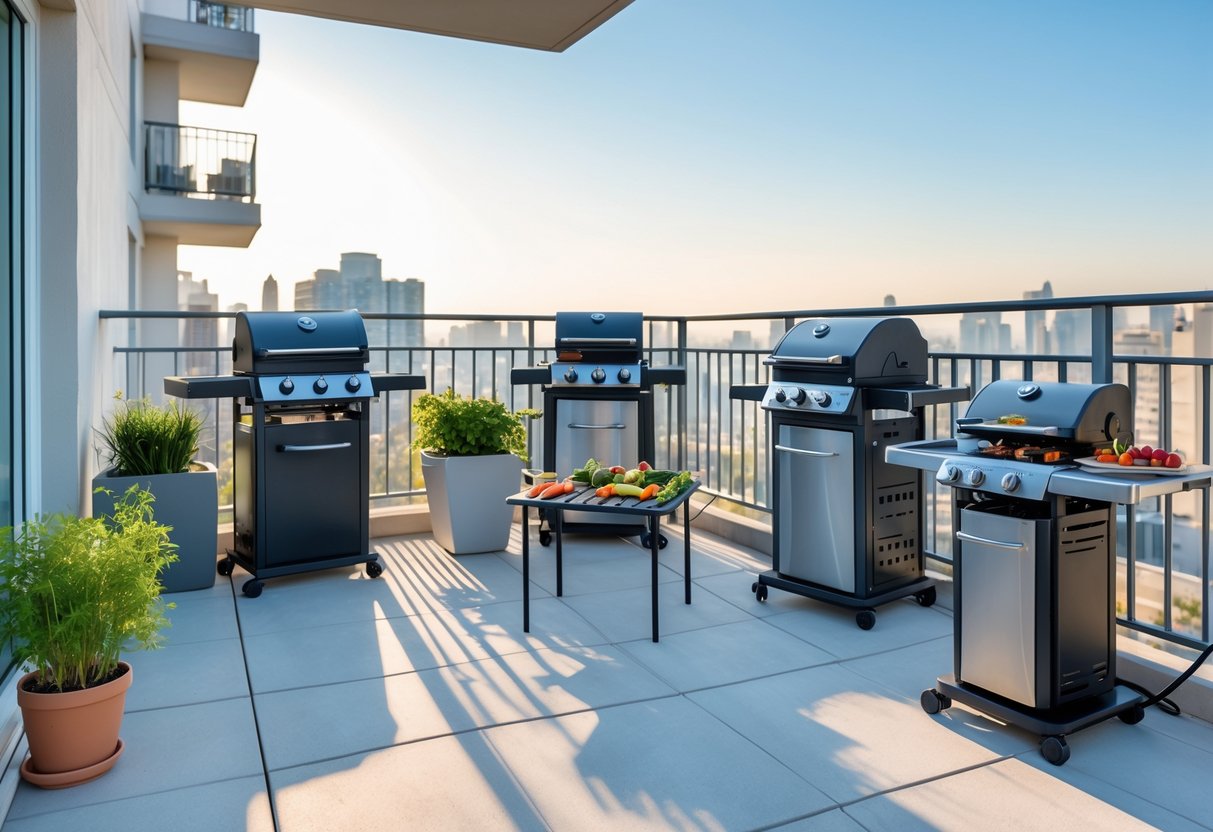
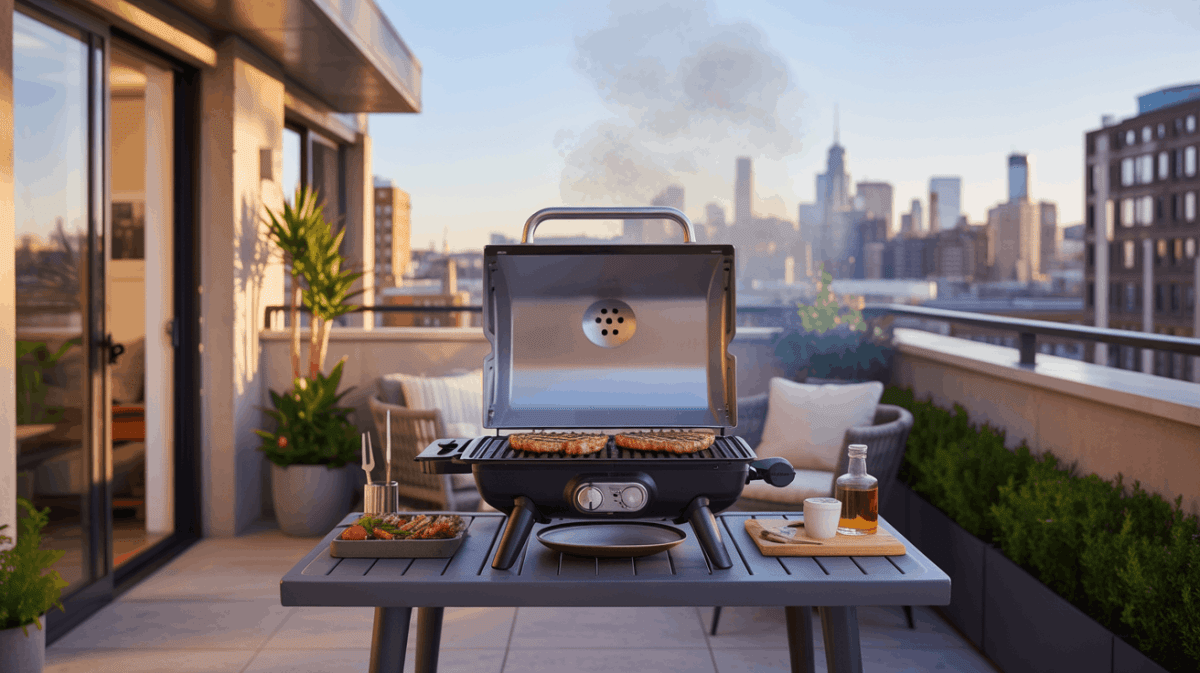
You’ll find compact plug-in grills, portable tabletop units, and high-powered outdoor electric grills that mimic the performance of a backyard grill. Use the rest of this article to compare sizes, heat output, smoke control, and safety features so you pick the best option for your balcony and cooking style.
Key Takeaways
- Electric grills work well on balconies when they match building rules and space limits.
- Look for models with good heat control, low smoke, and easy cleaning.
- Pick a size and power level that fits your balcony and the food you cook.
Why Choose Electric Grills for Apartment Balconies
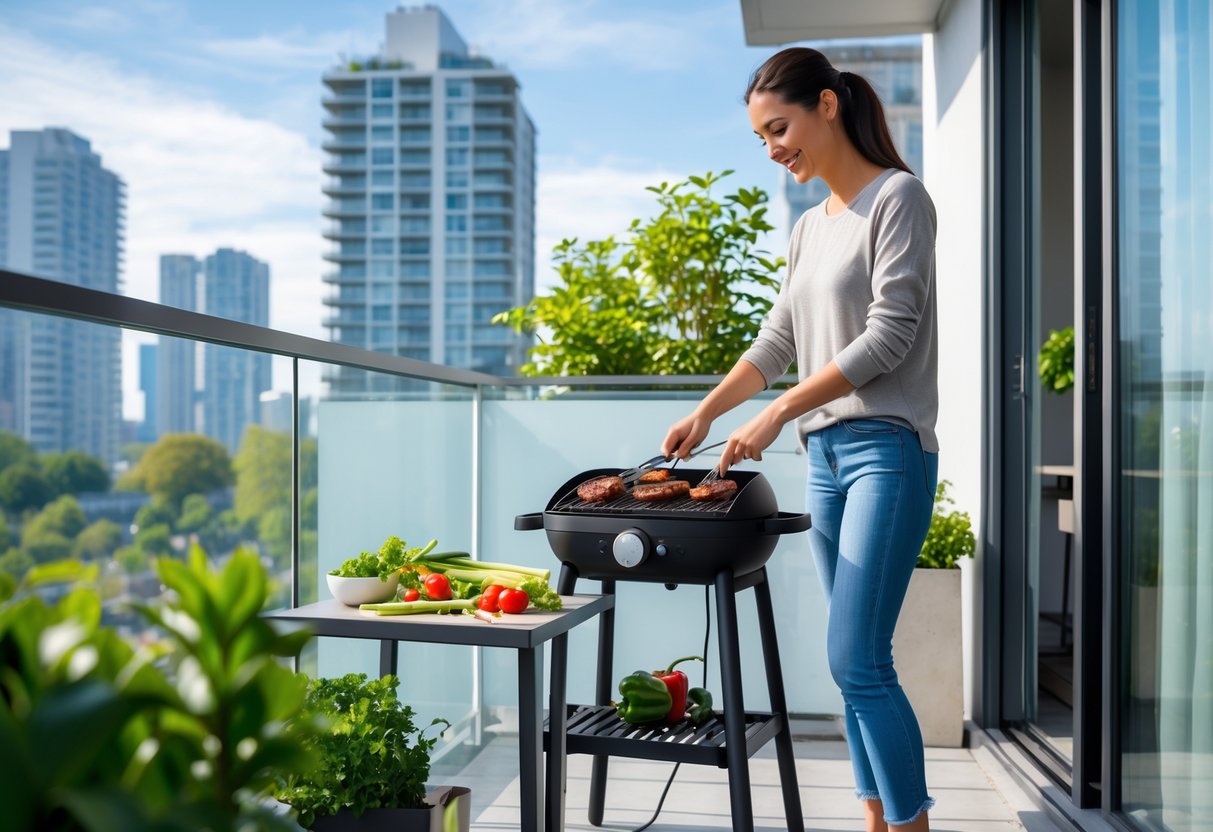
Electric grills cut out flame risks, reduce smoke, and fit small spaces. They let you grill on a balcony without propane or charcoal, while keeping heat and cleanup manageable.
Safety and Building Regulations
Electric grills run on household power, so they avoid open flames and fuel storage. Many HOAs and building codes ban gas and charcoal because of fire risk; an electric unit often meets those rules.
Still, check your lease or HOA rules before you buy. Look for cool-touch handles, automatic shutoff, and grounded plugs to reduce electrical hazards.
Choose a model with a UL or ETL safety mark. Keep the grill at least a few feet from walls, railings, and combustible materials.
Use a GFCI-protected outlet and an outdoor-rated extension cord if needed. Never run cords across walkways or under doors.
These steps cut both fire and electrical risk when you use an electric grill on a balcony.
Balcony-Friendly Design Advantages
Electric grills come in compact sizes made for tight spaces. Tabletop and slim cart models fit narrow balconies and small patios.
Foldable legs and detachable cords make storage simple. Look for a cooking area of 200–400 square inches for casual family meals.
Many models have built-in drip trays and nonstick plates to reduce grease and smoke. This lowers odors and makes cleanup faster.
Weight and footprint also matter—lightweight grills are easier to move for storage or cleaning. Materials like cast-aluminum plates and stainless steel housings resist rust from outdoor use.
If you plan balcony cooking often, choose one with a removable drip pan and dishwasher-safe parts to save time.
Indoor and Outdoor Versatility
Some electric grills work well both outdoors and indoors, giving you more cooking options. Compact tabletop grills fit kitchen counters for rainy days.
Larger plug-in units serve balcony gatherings. Confirm the manufacturer says indoor use is allowed.
Adjustable temperature control helps you cook steaks, fish, and vegetables without flare-ups. Look for models with a lid and thermostat for even heat and better searing.
Portable electric grills also power small roasts and plancha-style cooking, so you can switch between balcony cooking and indoor meals easily. A grill with removable plates, a drip tray, and simple controls means you can move it between spaces without leaving grease or heavy cleanup behind.
Top Electric Grill Options for Apartment Balconies
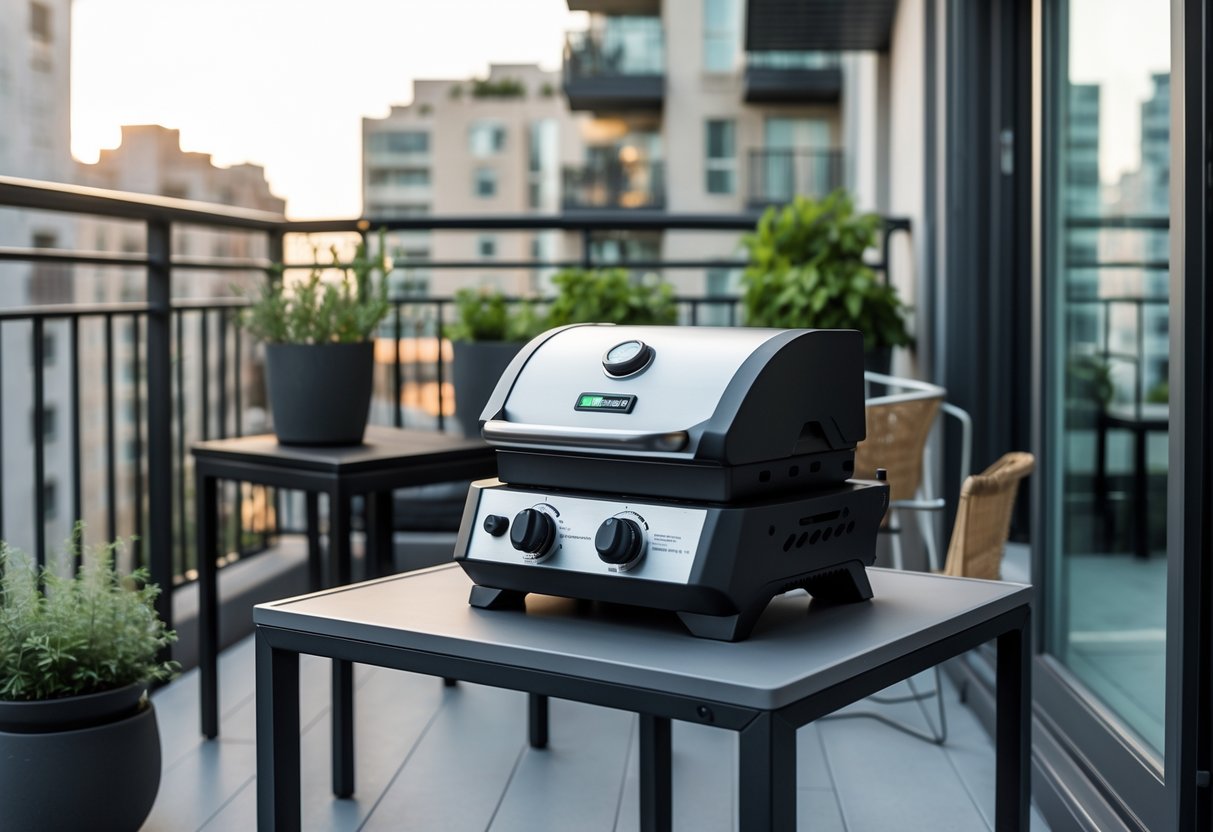
Choose a grill that fits your balcony rules, storage space, and the kind of food you cook most. Look for compact size, low smoke, and enough cooking area for the meals you plan to make.
Best Overall Models
Pick models that balance power, cooking area, and ease of cleaning. The George Foreman Indoor/Outdoor Electric Grill offers about 200 sq in of cooking surface, a nonstick grate, and simple temperature control.
It works well for burgers, chicken, and vegetables and stores upright when not in use. The Cuisinart Indoor/Outdoor Electric Grill gives you a slightly larger surface and more precise heat settings.
It handles family meals without needing propane or charcoal. Char-Broil’s Patio Bistro line, including the Tru-Infrared electric option, delivers even heat and reduced flare-ups.
Those grills often have folding side shelves or compact legs for tight balconies.
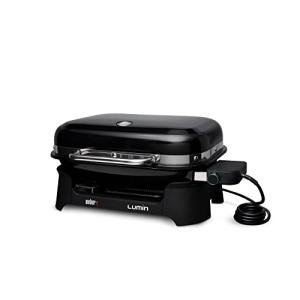
Weber Lumin Black Electric Grill
Enjoy delicious grilled meals right on your balcony or patio with the convenient and versatile Weber Lumin Black Electric Grill
Product information
$399.00
Product Review Score
4.53 out of 5 stars
140 reviewsProduct links
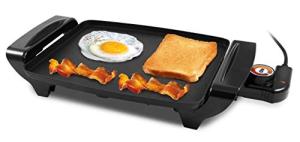
Electric Griddle with Non-Stick Surface and Cool-Touch Handles
Experience hassle-free cooking with this electric griddle that makes clean-up a breeze and keeps your hands safe
Product information
$32.42
Product Review Score
4.52 out of 5 stars
232 reviewsProduct links
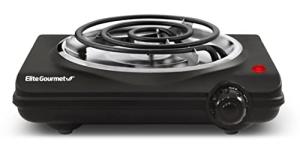
Compact Electric Griddle for Easy Cooking
Perfect for effortless meals and quick clean-up, this griddle is your new cooking buddy
Product information
$11.99
Product Review Score
4.14 out of 5 stars
197 reviewsProduct links
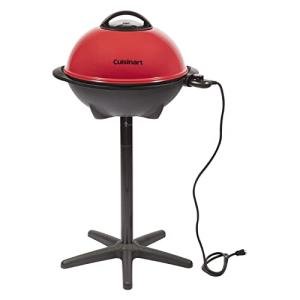
Cuisinart 2-in-1 Electric Grill for Indoor/Outdoor Use
Grill delicious meals anytime, anywhere with this versatile electric grill
Product information
$118.08
Product Review Score
4.44 out of 5 stars
184 reviewsProduct links
Portable and Compact Picks
If you need a true space-saver, choose a tabletop or small stand model. Look at portable electric grills under 15–20 pounds and with foldable or removable legs.
These let you cook on a small balcony and then tuck the unit into a closet. George Foreman’s smaller indoor/outdoor models and Techwood compact electric grills fit this category.
They heat quickly and are easy to move. Prioritize models with a drip tray and removable plates for fast cleanup.
That reduces smoke and makes them safe for shared walls and close neighbors.
Advanced Infrared and TRU-Infrared Grills
Infrared grills heat more evenly and can reach higher surface temperatures with less energy loss. Char-Broil’s Patio Bistro Tru-Infrared units use a ceramic or metal panel to spread heat and limit hot spots.
That helps sear steaks and lock in juices with fewer flare-ups. Infrared models often hold steady temperatures, so you get consistent results for thicker cuts and quick sears.
They can be slightly heavier, so check dimensions before you buy. If you want restaurant-style sear marks and faster cook times, choose a Tru-Infrared or infrared electric grill with a solid warranty and easy-to-clean panels.
Smokeless and Indoor Grilling Solutions
For strict balconies or indoor use, look for grills designed to reduce smoke and grease vapor. George Foreman Indoor/Outdoor and Ninja Woodfire (electric-wood hybrid) focus on low smoke profiles and integrated grease channels.
Indoor-specific models use nonstick plates, drip trays, and enclosed housings to limit visible smoke. Some have vertical storage options and dishwasher-safe parts for quick cleanup.
If your building bans open flames, these smokeless electric grills give you grilled flavor with minimal odor and no propane. Check your apartment rules first, then pick a model with a tight lid and accessible drip pan to keep smoke low.
Key Features to Look for in Electric Grills
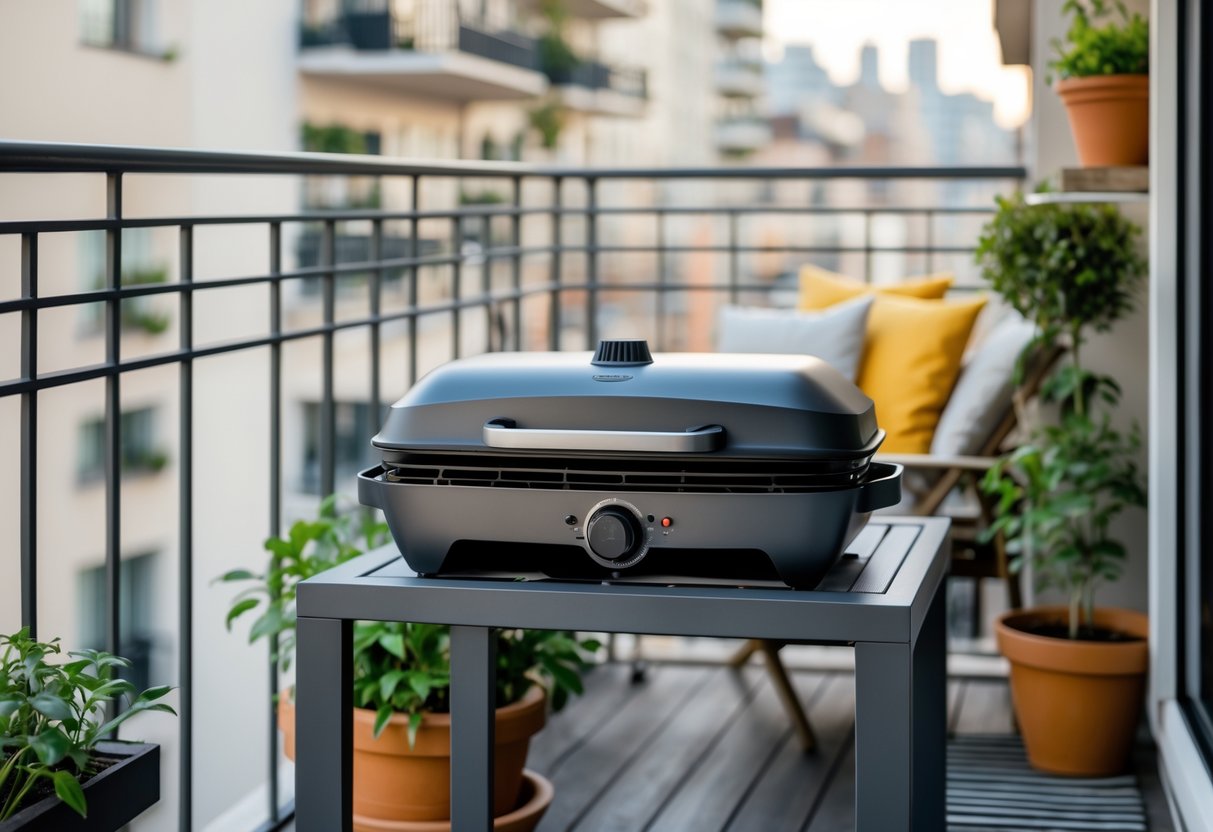
Choose a grill with clear heat control, a cooking area that fits your typical meals, and surfaces that clean easily. Pay attention to wattage and how the grill handles grease and heat for safe apartment use.
Temperature Control and Heat Settings
You want an electric grill with adjustable temperature control so you can sear, grill, or slow-cook without guesswork. Look for models that list exact ranges, such as 350°F to 550°F, or that offer 5 heat settings so you can move from low to high quickly.
A built-in temperature probe or a digital readout helps you hit target temps for steaks or chicken. Quick preheat and even heating matter.
Choose a grill with good wattage (often 1500W+) and a lid that traps heat to avoid cold spots. Controls should be simple to use from the balcony and stay accurate over time.
If the grill has a removable control pod or stand, confirm the electrical connections remain secure when you move or store it.
Cooking Surface Area and Capacity
Match the cooking surface area to the number of people you feed. A 200 sq. in. surface handles about a dozen burger-sized servings.
If you often cook for two, a compact 100–150 sq. in. grid works well. For small gatherings, aim for 180–250 sq. in.
Think about shape and layout, not just square inches. Removable grates help you flip larger cuts and make cleaning easier.
Removable stands let you use the grill on a tabletop or raised surface on a balcony. Check that the heat spreads evenly across the whole surface so food cooks uniformly.
Nonstick and Easy-Clean Surfaces
A non-stick cooking surface saves time and reduces oil use. Look for durable nonstick coating like “George Tough” or similar heavy-duty finishes that resist scratching.
Removable grill plates let you lift them off for washing instead of scrubbing the whole unit. A removable drip tray is essential for apartment use.
It collects grease and prevents flare-ups, and it should slide out easily for disposal. Avoid grills with hard-to-reach grease channels.
Surfaces that tolerate dishwasher-safe plates or have a simple wipe-clean exterior make balcony grilling less messy and faster to maintain.
Choosing the Best Electric Grill for Your Balcony
Look for a grill that fits your balcony dimensions, stores easily, and reaches grilling temperatures without heavy smoke. Pay attention to cooking surface area, weight, and how fast the grill heats and holds temperature.
Space and Size Considerations
Measure the usable space on your balcony first. Note rail clearance, any HOA rules, and where you will place the grill so you can safely leave room for hot surfaces and airflow.
Choose a compact electric grill if you have limited floor area. Look for a cooking surface at least 200–300 sq in for small family meals.
Taller grills or those with foldable warming racks add vertical cooking space without expanding the footprint. Consider fixed vs. tabletop models.
A tabletop or portable electric grill sits on a table and is easy to move. A freestanding electric patio grill gives more cooking area but needs more space and stability.
Match grill width to the balcony rail and door swing to avoid blocking exits.
Portability and Storage
Think about how often you'll move the grill. If you bring it in for winter, go for a lightweight portable electric grill with handles and a compact shape.
Grills under 20 lbs are just easier to carry. Look for foldable legs or a detachable stand to save storage room.
A foldable warming rack gives you more cooking options but folds flat for storage. Models with a cover or included bag protect the grill and make stacking it in a closet less of a hassle.
Check cord length and plug type so you can reach an outlet without dragging out long extension cords. Quick-release parts and screw-free panels make setup and teardown a lot faster.
Power and Heating Performance
Match wattage to your cooking needs. Most balcony electric grills use 1200–2200 watts.
Higher wattage heats up faster and holds steady temps for searing, but draws more current—so double-check your outlet can handle it. Adjustable heat settings and accurate thermostats are a must.
Digital controls or multiple heat zones let you grill steaks at high heat while keeping veggies warm. A ceramic or cast-aluminum heating element spreads heat more evenly than a cheap coil.
Heat recovery matters too. Good insulation, tight lids, and a foldable warming rack that traps heat help the grill bounce back to temp quickly and cut down your cooking time.
Tips for Safe and Enjoyable Balcony Grilling
Follow building rules, pick a safe spot, and keep your grill clean to avoid smoke, odors, and fire risks. Small steps—placement, maintenance, and technique—make grilling easier and keep neighbors happy.
Setup and Placement Guidelines
Keep your grill at least 3 feet from walls, railings, and overhangs. If your balcony has a roof or awning, move the grill to an open side or use a model rated for covered spaces.
Set the grill on a stable, non-combustible surface like concrete or a metal stand. Skip wooden decks or outdoor rugs under the grill.
Check building rules and HOA policies before buying. Most apartments allow electric grills but ban open-flame or propane units.
Make sure your electrical outlet can handle the grill’s wattage. Avoid long extension cords if you can.
Position the grill so smoke blows away from neighbors and your HVAC intake. Keep a clear path to the door and stash a small fire extinguisher nearby.
Look for grills with cool-touch handles and a removable drip tray to lower burn risk and make spills less of a pain.
Routine Maintenance and Cleaning
Empty the removable drip tray after each use to prevent grease buildup and cut down smoke. Wipe it with warm, soapy water and check for corrosion.
Replace the tray if you see deep pitting or holes. Scrub grates after they cool but while they’re still warm to get rid of stuck-on food.
Use a grill brush or scraper made for your grate material. Clean heating elements gently with a soft brush and don’t submerge electrical parts.
Check seals, cords, and cool-touch handles regularly. Tighten loose screws and swap out frayed cords right away.
Every few months, do a deep clean: remove grates, clean the interior, and vacuum ash or food bits from corners and vents.
Cooking Techniques for Optimal Results
Preheat the grill for 8–10 minutes to get it up to temp. Try two-zone cooking if you can—a hotter side for searing, a cooler side for thicker cuts.
That setup helps avoid flare-ups and smoke. Trim extra fat from meats to limit drips that cause smoke.
If your grill has a fat-removing slope, set it so grease flows into the drip tray. Use drip pans under fatty foods to catch runoff and make cleanup less annoying.
Use a meat thermometer to check for safe temps. For lean foods like fish or veggies, lightly oil the grate or use a grill basket to prevent sticking.
Close the lid for steady heat, but open it briefly to check doneness and move food between zones as needed.
Frequently Asked Questions
These answers cover specific grill models, size tips, safety rules, and the features that matter most for balcony grilling. You’ll see options for small spaces, quick notes on Weber electric grills, and clear safety steps to follow.
What are the top-rated electric grills suitable for apartment balcony use?
Top-rated picks include compact plug-in models with good heat control and easy cleanup. Check out the Napoleon TravelQ series, Cuisinart Griddler models with enclosed lids, and the George Foreman indoor/outdoor electric grills for reliable performance.
Look for models with at least 1,500–2,000 watts for even searing and a steady thermostat. Those power levels give you quick heat without waiting around for preheat.
Which compact electric grills are recommended for limited balcony space?
Pick grills with a small footprint and folding or removable parts. The Weber Pulse 1000 (if your building allows it) and the Char-Broil Patio Bistro are both narrow and fit on small railings or bistro tables.
Countertop electric griddles or tabletop grills that store flat under a bed or in a closet are also good options. Measure your balcony and check product width and depth before buying.
How do Weber electric grills perform for apartment balconies?
Weber electric grills heat evenly and give you precise temperature control. They use quality materials and tend to last longer than cheaper brands.
Weber models can be heavier and a bit pricier, but their grates and heating elements deliver consistent results. Always check your lease and local rules, since some buildings limit powered grills.
What should I consider when choosing an electric grill for outdoor use on a balcony?
Check local fire codes, your lease, and HOA rules before buying. Make sure you know which fuel types and distances from walls or railings are allowed.
Look for water-resistant housings and a grounded plug or GFCI protection for outdoor outlets. Consider drip tray access, weight, and whether the grill makes a lot of smoke from fats or marinades.
Are there any outdoor electric grills designed specifically for apartment living?
Yes, several brands make balcony-friendly models with low smoke, compact size, and safety locks. Models labeled “patio,” “balcony,” or “apartment” usually have smaller footprints and enclosed heating elements.
Grills with cool-touch handles and locking lids help prevent tipping in tight spaces. Always double-check product specs to make sure the size and power fit your building’s rules.
What are the safety considerations for using an electric grill on an apartment balcony?
Set your grill on something stable and non-combustible—concrete or tile usually works. Keep it a few feet away from walls, soffits, or railings, just to be safe.
Don’t walk away while the grill’s plugged in or hot. It’s tempting, but things can go sideways fast.
If you need an extension cord, make sure it’s outdoor-rated and only use one if your building rules allow it. Always plug into a GFCI outlet to help prevent shocks.
Have a fire extinguisher handy, just in case. Wipe away grease buildup often to help prevent flare-ups and excessive smoke.
Compact Electric Griddle for Easy Cooking
Perfect for effortless meals and quick clean-up, this griddle is your new cooking buddy
Product information
$11.99
Product Review Score
4.14 out of 5 stars
197 reviewsProduct links
Cuisinart 2-in-1 Electric Grill for Indoor/Outdoor Use
Grill delicious meals anytime, anywhere with this versatile electric grill
Product information
$118.08
Product Review Score
4.44 out of 5 stars
184 reviewsProduct links
DISCLAIMER
This document is provided for general information purposes only and should not be relied upon as providing legal advice, technical, or specific operational guidance to the reader, whether as to the practices described in the document or the applicable legal requirements and regulations. outdoorgrillguide.com expressly disclaims any responsibility for liability arising from or related to the use or misuse of any information in this document.