How to Grill Whole Eggplants: Step-By-Step Recipe and Tips
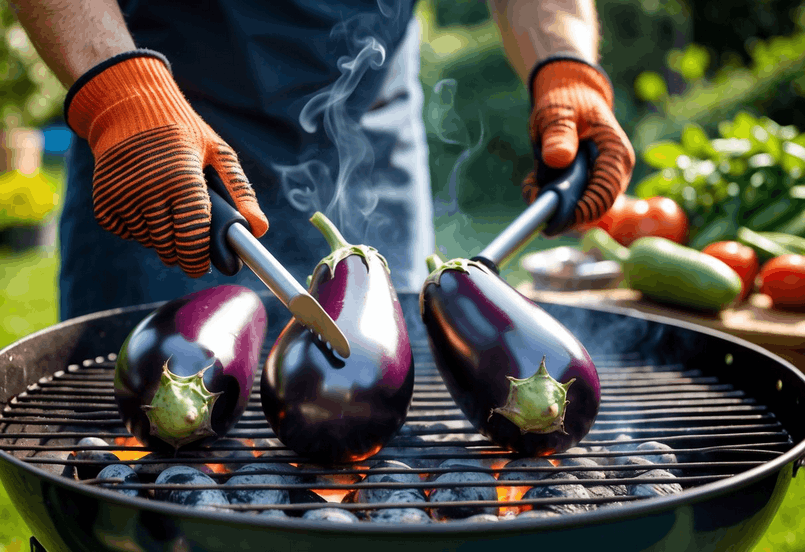
Grilling whole eggplants is a fantastic way to enjoy summer produce. If you are learning how to grill eggplant, the process is easier than you might think and involves placing the vegetable directly on the heat. This grilled eggplant recipe gives you creamy flesh inside with a slightly charred skin that adds depth to the flavor.
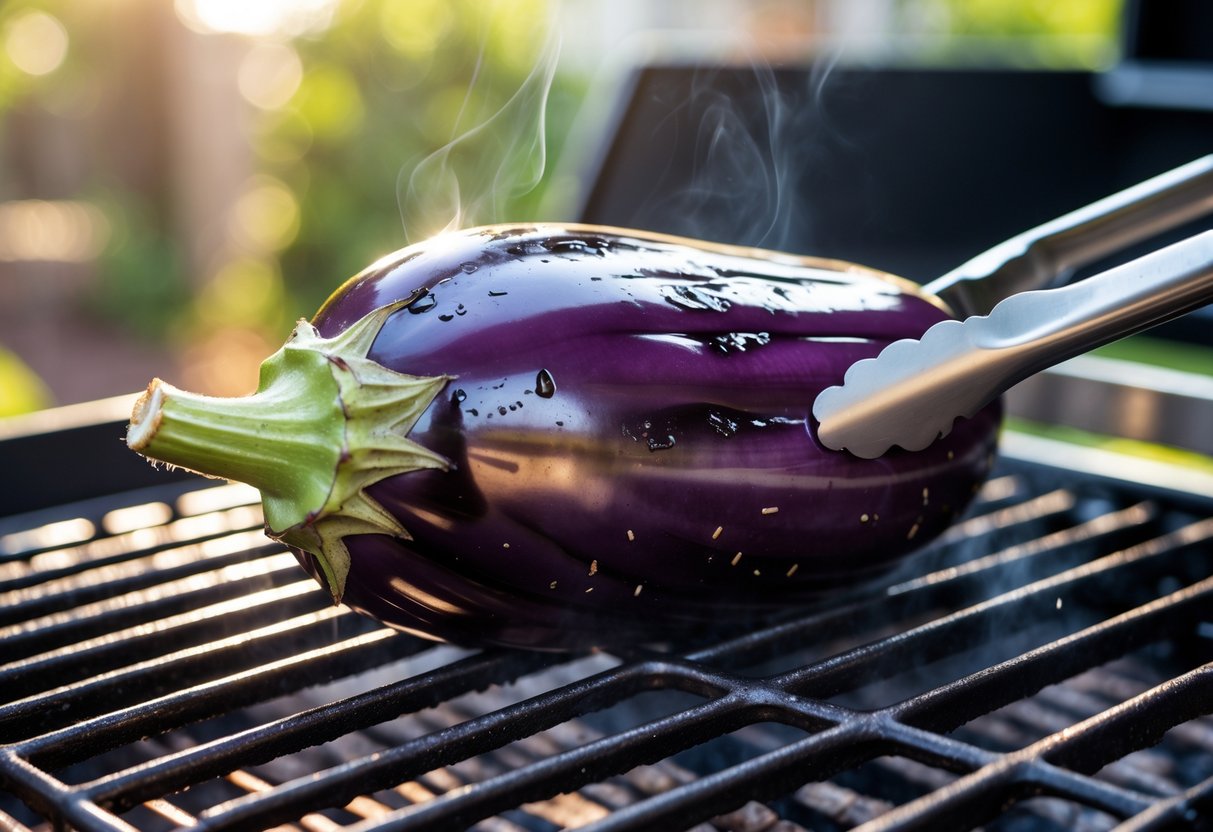
The key to success is using medium-low heat and cooking the eggplant for 30 to 60 minutes until it completely collapses. Many people make the mistake of grilling at too high a temperature, which burns the outside before the inside gets soft. We want the whole eggplant to cook slowly so the flesh becomes smooth and ready to use.
Once you learn this basic technique, you can use grilled whole eggplant in dips like baba ganoush, serve it as a side dish with olive oil and salt, or add it to other recipes. The simple process and smoky taste make it worth adding to your grilling routine.
Key Takeaways
-
Grill whole eggplants over medium-low heat for 30 to 60 minutes until they collapse completely
-
Choose firm eggplants and pierce the skin before grilling to let steam escape during cooking
-
Use the tender grilled flesh in dips, serve it with olive oil and seasonings, or add it to various recipes
Choosing the Best Eggplants for Grilling
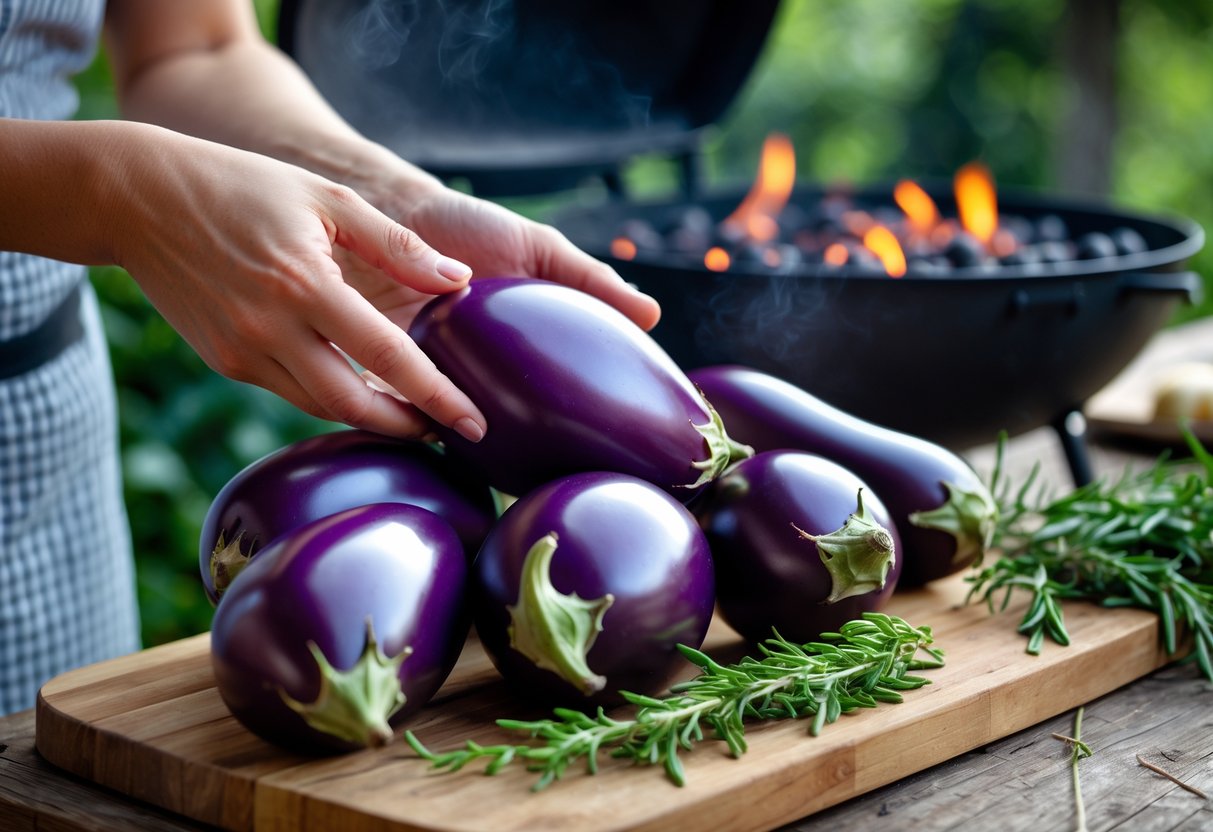
The right eggplant makes all the difference when grilling whole. Fresh eggplants with firm flesh and smooth skin will give us the best results, while the size and variety we choose affects cooking time and texture.
Selecting Globe Eggplant or Other Varieties
Globe eggplant is the most common variety we find at grocery stores. It has a round, bulbous shape and deep purple skin. This variety works well for whole grilling because of its size and meaty flesh.
Japanese eggplant varieties are longer and thinner than globe types. They cook faster on the grill, usually taking 30 to 40 minutes. Italian eggplants fall between globe and Japanese types in size.
We can grill any of these varieties whole. Globe eggplants take the longest to cook but offer more flesh to work with. Japanese eggplant is ideal when we need quicker cooking times or want individual servings.
Visual and Texture Cues for Freshness
A fresh eggplant has smooth, glossy skin that looks almost shiny. The skin should feel tight and free of wrinkles or loose spots.
When we press gently on the eggplant, it should feel firm and spring back. Soft spots indicate the eggplant is past its prime. We should avoid eggplants with brown patches or blemishes on the skin.
The stem and cap should look green and fresh, not dried out or brown. A fresh eggplant feels heavy for its size because it still has good moisture content. If the eggplant feels light or hollow, it may be old and have developed bitter flesh.
Why Eggplant Size Matters for Grilling
Medium-sized eggplants work best for whole grilling. They have a better ratio of flesh to skin and cook more evenly than very large ones.
Large globe eggplants can take up to 60 minutes to cook through completely. They may char on the outside before the inside becomes tender and creamy. Very small eggplants cook quickly but don't yield much usable flesh.
We want eggplants that are 6 to 8 inches long for globe varieties. This size gives us enough flesh for dips or side dishes while keeping cooking time manageable. A Japanese eggplant should be about the same length but will be much thinner in diameter.
Preparing Whole Eggplants for the Grill
Getting eggplants ready for grilling involves three essential steps: cleaning them properly, creating vents, and removing excess moisture. These preparation techniques help us achieve tender, flavorful grilled eggplant. Understanding how to grill eggplant ensures the skin doesn't burst and the inside stays creamy.
Cleaning and Trimming Techniques
We start by rinsing each eggplant under cold running water to remove any dirt or residue from the skin. Pat the eggplant dry with a clean kitchen towel or paper towels.
The stem and leaves can stay attached during grilling. They won't affect the cooking process and can actually serve as a handle when turning the eggplant on the grill. If you prefer, you can trim just the very end of the stem, but there's no need to remove it completely.
Look over the eggplant for any soft spots, bruises, or blemishes. Choose firm eggplants with glossy, smooth skin for the best results. A fresh eggplant should feel heavy for its size and have tight, unwrinkled skin.
We don't need to peel eggplants before grilling them whole. The skin protects the flesh during cooking and adds a pleasant smoky flavor to the finished dish.
Poking or Scoring for Steam Release
We need to pierce the eggplant skin before placing it on the grill to prevent it from bursting. Use a fork or sharp knife to poke holes all over the eggplant, spacing them about half an inch apart. Make 10-12 pricks for a medium eggplant or up to 20 for larger ones.
Pierce just deep enough to break through the skin without damaging the flesh too much. These small vents allow steam to escape as the moisture inside heats up during grilling. Without these holes, pressure can build up and cause the eggplant to split or explode on the grill.
The holes also help heat penetrate the eggplant more evenly. This ensures the inside cooks through at the same rate as the outside. As a bonus, any seasonings or marinades we apply can seep deeper into the flesh through these openings.
Drying Eggplants Before Grilling
After washing the eggplant, we must dry it completely before applying oil or seasonings. Use paper towels or a clean kitchen towel to pat the entire surface dry. Any water left on the skin will prevent the oil from adhering properly.
A dry surface is essential for achieving a crispy, charred exterior on our grilled eggplant. Moisture creates steam when it hits the hot grill, which works against the browning process we want. The drier the eggplant, the better it will develop those desirable grill marks and smoky flavor.
Once the eggplant is completely dry, we can brush it with olive oil and add our seasonings. The oil will stick evenly to a dry surface and help create that golden, crispy skin we're looking for.
How to Grill Whole Eggplants: Step-by-Step Process
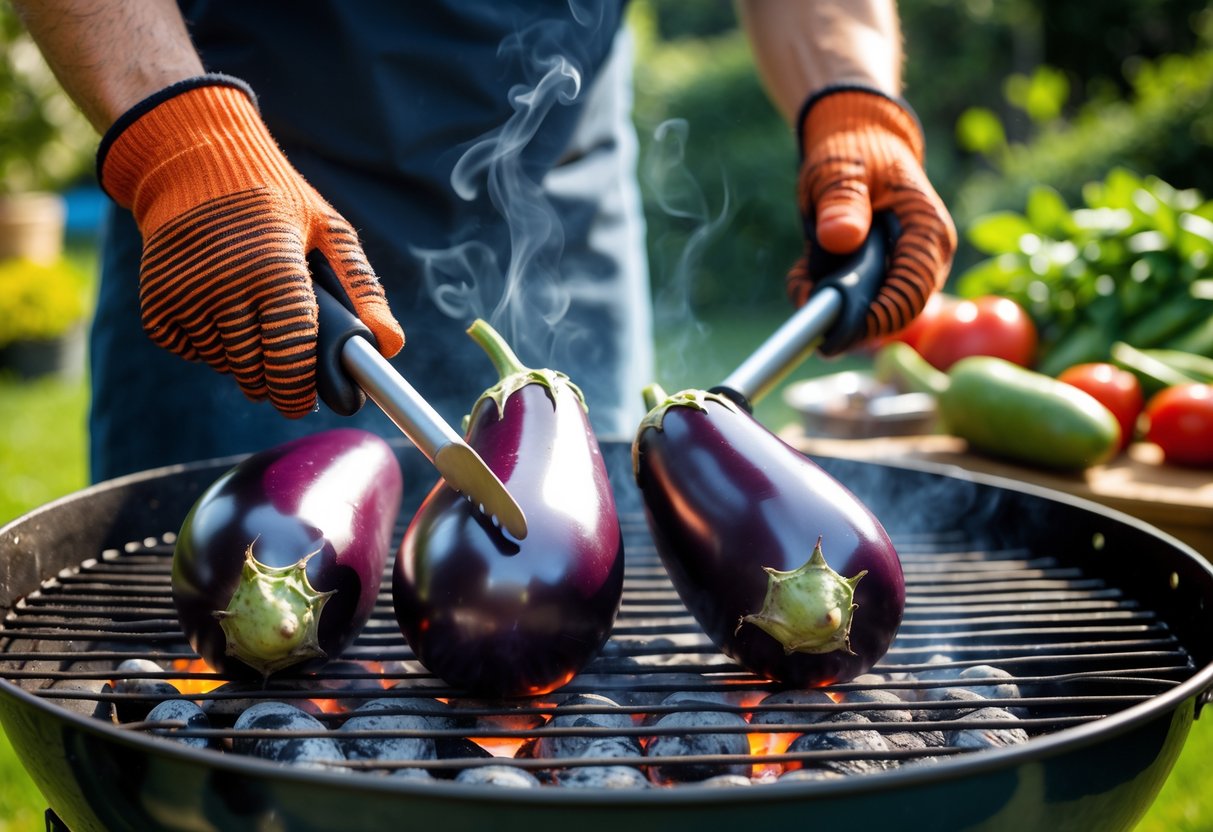
Following a solid grilled eggplant recipe requires proper grill setup, temperature control, and timing. We'll guide you through each essential step of how to grill eggplant to ensure your whole grilled eggplant turns out perfectly every time.
Preheating and Setting Up Your Grill
We need to preheat our grill to medium-high heat, which typically ranges from 375°F to 450°F. This temperature range allows the eggplant to cook evenly while developing those characteristic char marks on the skin.
For gas grills, we turn on all burners and close the lid for 10-15 minutes. This ensures the grates are hot enough to prevent sticking. For charcoal grills, we wait until the coals are covered with white ash before placing the eggplant on the grates.
While the grill heats up, we clean the grates with a wire brush. A clean surface helps achieve better grill marks and prevents old residue from affecting the flavor. We can also oil the grates lightly using a paper towel dipped in vegetable oil, held with tongs.
Optimal Grill Temperatures and Cooking Times
We maintain medium-high heat throughout the cooking process for the best results. At this temperature, a medium to large eggplant typically takes 20-30 minutes. A Japanese eggplant may cook faster because of its slender shape.
Cooking Timeline:
-
First 5-7 minutes per side for initial charring
-
Total cooking time: 20-30 minutes
-
Larger eggplants may need up to 35-40 minutes
We monitor the grill temperature by keeping the lid closed as much as possible between turns. This traps heat and smoke, which adds flavor to the eggplant. If the skin starts to blacken too quickly, we reduce the heat slightly or move the eggplant to a cooler part of the grill.
Turning and Checking Doneness
We turn the eggplant every 5-7 minutes using tongs to ensure all sides cook evenly. Each rotation exposes a new surface to direct heat, promoting uniform cooking and preventing any side from burning.
To check doneness, we insert a knife or fork into the thickest part of the eggplant. The utensil should slide through easily with little resistance. The eggplant should feel soft when we press it gently with tongs.
We typically turn the eggplant 3-4 times during the cooking process. The skin will become charred and blistered, while the flesh inside becomes creamy and tender. If the knife meets resistance, we continue grilling for another 5 minutes before checking again.
Achieving Perfect Grill Marks
For a beautiful grilled eggplant recipe, visual appeal is just as important as taste. We create attractive grill marks by letting the eggplant sit undisturbed for 5-7 minutes per side.
Moving the vegetable too soon prevents the marks from forming properly. This ensures your eggplant on the grill looks as good as it tastes.
For a crosshatch pattern, we place the eggplant on the grates at a 45-degree angle. After 3-4 minutes, we rotate it 90 degrees without flipping. This creates the classic diamond pattern that makes grilled eggplant visually appealing.
We ensure the grill grates are properly preheated before placing the eggplant. Hot grates sear the skin immediately, creating defined marks. The charred lines not only look good but also add a deeper, smokier flavor to our bbq eggplant recipe.
Seasoning and Flavor Variations
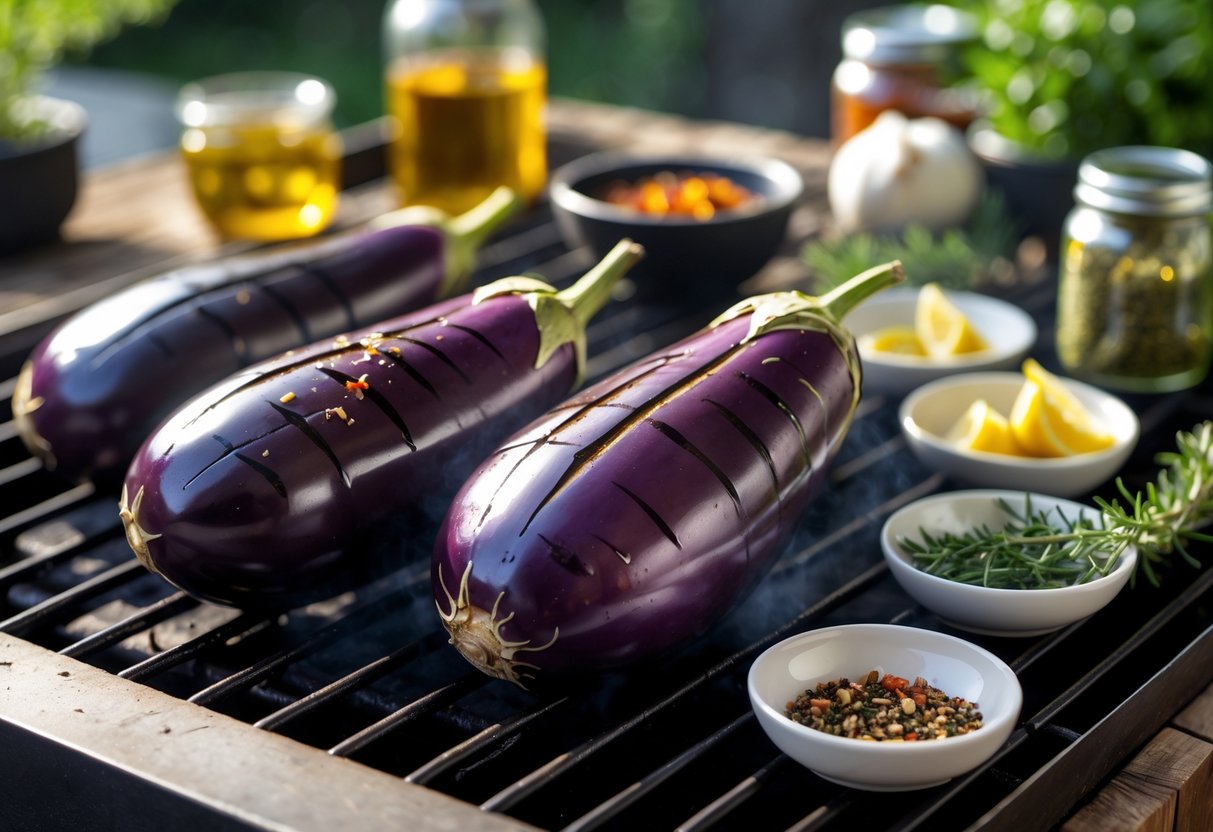
Grilled whole eggplant needs minimal seasoning to taste great, but the right combinations can take it from simple to special. The basic approach starts with olive oil and salt, while herb blends and fresh ingredients add layers of flavor that complement the smoky taste from the grill.
Basic Olive Oil, Salt, and Pepper
We recommend drizzling 2 tablespoons of extra virgin olive oil over each halved eggplant after grilling. The oil soaks into the soft flesh and adds richness without overpowering the natural flavor.
Flaky sea salt works better than regular table salt. We use about 1 teaspoon per eggplant, sprinkled evenly across the cut surface. The larger flakes give you bursts of saltiness that balance the mild eggplant.
Freshly cracked black pepper adds a sharp bite. We grind about 1/2 teaspoon per eggplant right before serving. Pre-ground pepper loses its punch and won't give you the same kick.
This simple combination lets the smoky char shine through. It is our go-to grilled eggplant recipe for a side dish or light main course. This easy eggplant recipe highlights the natural flavors perfectly.
Using Italian Seasoning or Homemade Blends
Italian seasoning brings Mediterranean flavors to grilled eggplant. We mix 1 tablespoon of the dried herb blend into 3 tablespoons of olive oil and brush it on the cut surface after grilling.
Store-bought Italian seasoning contains basil, oregano, rosemary, and thyme. It works well in a pinch. For homemade Italian seasoning, we combine 2 teaspoons dried basil, 2 teaspoons dried oregano, 1 teaspoon dried thyme, 1 teaspoon dried rosemary, and 1/2 teaspoon garlic powder.
We also add garlic powder directly to grilled eggplant. About 1/2 teaspoon per eggplant gives you garlic flavor without the raw bite of fresh cloves. Mix it with the olive oil before drizzling.
Fresh Herbs, Citrus, and Spice Options
Fresh herbs taste brighter than dried ones. We chop flat-leaf parsley, basil, or mint and sprinkle it over the eggplant right before serving. Use about 2 tablespoons per eggplant.
Lemon juice cuts through the richness. We squeeze half a lemon over each grilled eggplant half. The acidity wakes up all the other flavors and keeps the dish from feeling heavy.
For heat, we add red pepper flakes or a drizzle of harissa. Start with 1/4 teaspoon of red pepper flakes per eggplant and adjust to taste. Balsamic vinegar works too—1 tablespoon adds tangy sweetness that pairs well with the char.
Za'atar, a Middle Eastern spice blend, brings earthy and nutty notes. We sprinkle 1 teaspoon per eggplant half along with the olive oil and salt. Fresh cilantro and lime juice make a good combination for a different flavor profile in this versatile eggplant recipe.
Serving Suggestions for Grilled Whole Eggplant
Grilled whole eggplant works well on its own or as part of a larger meal. The smoky flesh pairs with many dishes and flavors, from simple preparations to complex Mediterranean spreads.
As a Standalone Side or Centerpiece
We can serve grilled whole eggplant straight off the grill with minimal additions. Cut the eggplant in half lengthwise and drizzle with olive oil, lemon juice, and a sprinkle of salt. Fresh herbs like parsley or mint add brightness.
For a more substantial presentation, we scoop out the soft flesh and mix it with tahini, garlic, and lemon juice to make baba ganoush. This classic dip sits nicely alongside pita bread, vegetables, or crackers. The smoky flavor from grilling makes the dip taste richer than oven-roasted versions.
We can also top the halved eggplant with yogurt, pomegranate seeds, and toasted pine nuts. This creates a dish that looks impressive and tastes complex without much extra work.
Incorporating Grilled Eggplant into Main Dishes
Grilled eggplant flesh works as a base for many main dishes. We dice the cooked flesh and add it to pasta with tomatoes, garlic, and fresh basil. The smoky eggplant adds depth to simple pasta dishes.
Eggplant parmesan becomes easier when we start with grilled whole eggplant instead of frying slices. We slice the grilled eggplant, layer it with marinara sauce and mozzarella, then bake until the cheese melts. This method cuts down on oil and cooking time.
The grilled flesh also works well in grain bowls, mixed with quinoa or couscous, chickpeas, and roasted vegetables. We can stuff the hollowed-out eggplant shells with rice, ground meat, or a vegetable mixture and bake them until heated through.
Mediterranean-Inspired Presentations
Mediterranean flavors complement grilled eggplant naturally. We prepare eggplant caponata by chopping the grilled flesh and mixing it with tomatoes, capers, olives, and vinegar. This Sicilian dish works as a side or spooned over crusty bread.
Greek-style preparations include topping the eggplant with feta cheese, oregano, and olive oil. We can also make a layered dish similar to moussaka by placing the grilled eggplant slices over spiced meat and topping with béchamel sauce.
For a simpler option, we serve the eggplant with tzatziki sauce and warm pita. The cool, creamy yogurt sauce balances the warm, smoky eggplant. Adding hummus, tabbouleh, and olives creates a full Mediterranean spread that works for lunch or dinner.
Creative Uses for Grilled Eggplant
Grilled eggplant works well in dips, salads, and quick meals when you have leftovers. The smoky flavor adds depth to simple dishes, and the soft texture blends easily into spreads or sits nicely on top of grains.
Preparing Eggplant Dip and Baba Ganoush
Grilled eggplant makes an excellent base for baba ganoush and other dips. We scoop out the soft flesh from the grilled eggplant and discard the charred skin. The smoky flavor from the grill adds a natural depth that you can't get from roasting in an oven.
For basic baba ganoush, we blend the eggplant flesh with tahini, lemon juice, garlic, and salt. The ratios can change based on your taste, but a good starting point is two tablespoons of tahini and one tablespoon of lemon juice per eggplant. We mash it with a fork for a chunky texture or use a food processor for something smooth.
A simple eggplant dip needs even fewer ingredients. We mix the grilled eggplant with olive oil, garlic, and herbs like parsley or mint. This works well with pita chips or raw vegetables. The grilled eggplant already has enough flavor that you don't need many additions.
Building Salads and Grain Bowls
Grilled eggplant adds substance to salads and grain bowls. We cut it into cubes or strips and place it on top of greens, quinoa, rice, or farro. The warm eggplant pairs well with cool, crisp vegetables like cucumber, tomatoes, and bell peppers.
For a Mediterranean-style bowl, we combine grilled eggplant with chickpeas, feta cheese, olives, and a lemon vinaigrette. The eggplant soaks up the dressing and adds a meaty texture that makes the bowl more filling. We also use it in grain salads with couscous or bulgur wheat.
The eggplant works as a main ingredient or a side component. When we want a lighter meal, we serve it over mixed greens with a simple tahini sauce. For something more substantial, we build a bowl with multiple grains, proteins like grilled chicken or tofu, and several types of vegetables.
Ideas for Leftover Grilled Eggplant
Leftover grilled eggplant stays fresh in the fridge for two days when stored in an airtight container. We reheat it in a 400°F oven for 5 to 10 minutes until it's hot throughout. Cold eggplant also works in sandwiches and wraps.
We layer leftover grilled eggplant in sandwiches with fresh mozzarella, tomatoes, and basil. It also goes well in wraps with hummus and other grilled vegetables. For a quick snack, we blend cold grilled eggplant into hummus or use it as a pizza topping.
Leftover grilled eggplant can go into pasta dishes too. We chop it up and toss it with olive oil, garlic, and pasta for a simple weeknight meal. The eggplant breaks down slightly and creates a light sauce when mixed with pasta water.
Frequently Asked Questions
Mastering how to grill eggplant requires medium-high heat between 375°F and 450°F, and they typically take 20 to 30 minutes to cook. We can check for doneness by piercing the flesh with a knife or fork, and piercing the skin before grilling prevents bursting.
What is the ideal temperature for grilling whole eggplants?
We recommend grilling whole eggplants at medium-high heat, which ranges from 375°F to 450°F. This temperature range allows the eggplant to cook evenly throughout while developing a nice char on the outside.
If the heat is too low, the eggplant will take longer to cook and may become mushy without getting that smoky flavor. If the heat is too high, the skin will burn before the inside cooks through.
We should preheat the grill for 10 to 15 minutes before adding the eggplant. This ensures the grates are hot enough to create good sear marks right away.
How can I tell when a grilled eggplant is perfectly cooked?
We can test for doneness by inserting a knife or fork into the thickest part of the eggplant. The utensil should slide in easily with little resistance.
The eggplant should feel soft when we press it gently with tongs. The skin will be charred and darkened, and the entire vegetable should have collapsed slightly from its original shape.
Another sign is that the eggplant will give off a rich, smoky smell. We can also look for the flesh to appear creamy and tender when we cut it open.
Should I pierce or score eggplants before grilling them?
We should pierce the eggplant skin several times with a fork before grilling. This step is important because it lets steam escape during cooking and prevents the eggplant from bursting on the grill.
We need to make about 10 to 12 holes for a medium-sized eggplant, and up to 20 holes for larger ones. The holes should be spread evenly across the entire surface.
We only need to pierce through the skin, not deep into the flesh. This creates small vents without damaging the structure of the eggplant.
How long does it generally take to grill whole eggplants?
Whole eggplants typically take 20 to 30 minutes to grill completely. The exact time depends on the size of the eggplant and the temperature of our grill.
We should turn the eggplant every 5 to 7 minutes to ensure even cooking on all sides. A medium to large eggplant that weighs between 1 and 1.5 pounds will usually fall within this time range.
If the eggplant still feels firm after 25 minutes, we can continue grilling it for another 5 minutes. We should check it frequently to avoid overcooking.
What are the best seasonings or marinades for grilled eggplants?
We can brush the eggplant with olive oil before grilling and season it with salt and pepper. This simple combination enhances the natural flavor while helping the skin crisp up.
We can also add herbs like rosemary, thyme, or oregano for extra flavor. Spices such as garlic powder, paprika, cumin, or chili flakes work well too.
For a marinade, we can combine olive oil with minced garlic, lemon juice, and herbs. We should apply seasonings before grilling and can add more after the eggplant is cooked.
Can whole eggplants be grilled on an electric grill, and if so, are there any special instructions?
We can grill whole eggplants on an electric grill using the same basic technique. We should set the electric grill to medium-high heat and preheat it for about 10 minutes.
The main difference is that electric grills may have less intense heat than gas or charcoal grills. This means the eggplant might take a few minutes longer to cook through.
We should still pierce the skin before grilling and turn the eggplant regularly for even cooking. We may need to monitor it more closely to achieve the desired level of char since electric grills produce less smoke.