


Simple Tricks to Keep Chicken Moist and Tender
Dry, tough chicken is a classic grilling headache. Usually, it comes down to three things: uneven thickness, bad heat management, and pulling the chicken off at the wrong time.
The good news? There’s a fix for each.
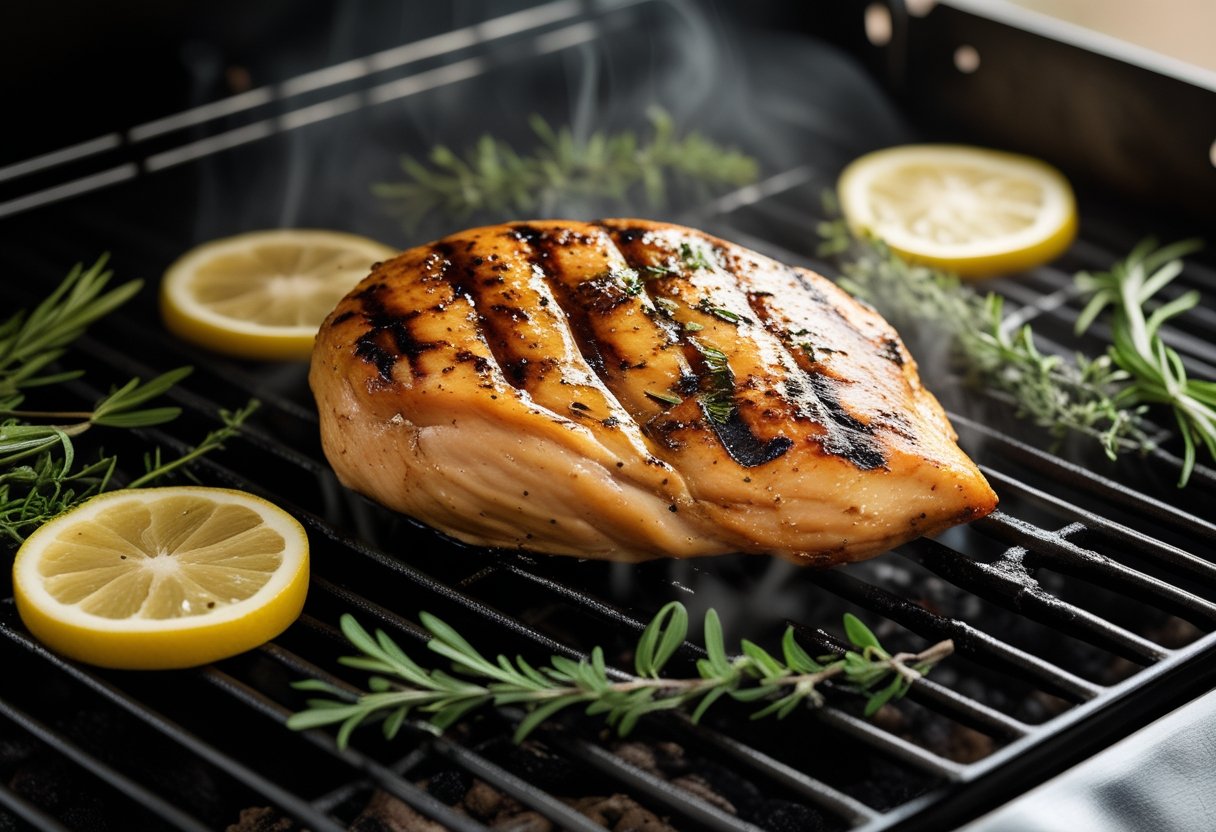
The fastest way to grill juicy chicken is to treat it as a system: prep for even cooking, set up your grill for two-zone heat, and pull by temperature instead of time.
When you do all three, dryness is rare. This works on gas or charcoal, breasts or thighs—doesn’t matter.
Most articles talk up marinades and brining. Both help, but they can’t save chicken that’s overcooked or unevenly thick.
The real solution is connecting all the variables into a repeatable process.
Key Takeaways
- Pounding chicken to even thickness is one of the most effective fixes for dry grilled chicken, but most home cooks skip it.
- A two-zone grill setup gives you control over carryover cooking and keeps the outside from burning before the inside is done.
- Pulling chicken at 160°F instead of 165°F and letting it rest makes it noticeably juicier every time.
Start With The Right Cut And Shape
The cut you pick—and how you prep its shape—makes a huge difference. Uneven cuts cook unevenly, and leaner cuts need more attention than the fatty ones.
Why Chicken Breast Is Harder To Keep Moist
Grilled chicken breast is leaner than thighs or drumsticks, so there’s less fat to protect it from the heat. It’s also usually thicker in the center and thinner at the ends, so the tips dry out before the middle is done.
That combo—low fat and uneven shape—is why chicken dries out more than other cuts. Thighs are forgiving, thanks to their higher fat content, so you can cook them a bit longer without worry.
When Grilled Chicken Breast Works Best
Grilled chicken breasts are best when they’re not too big. Anything over 8 ounces is tough to cook evenly without a two-zone setup.
Smaller breasts, or ones sliced in half horizontally, are much easier to control. If you want fast, weeknight grilling, smaller grilled chicken breasts pounded flat are your safest bet. For longer cooks, bone-in thighs or drumsticks are easier and less stressful.
How To Pound Chicken To Even Thickness
Put the breast in a zip-top bag or wrap it in plastic wrap. Use a meat mallet or even a heavy pan to pound the thickest part down until the whole breast is about 3/4 inch thick.
This simple step helps juicy chicken breast more than most marinades. Even thickness means every part hits the right temperature at the same time, so no more dried-out ends.
Prep For Moisture Before The Chicken Hits The Grates
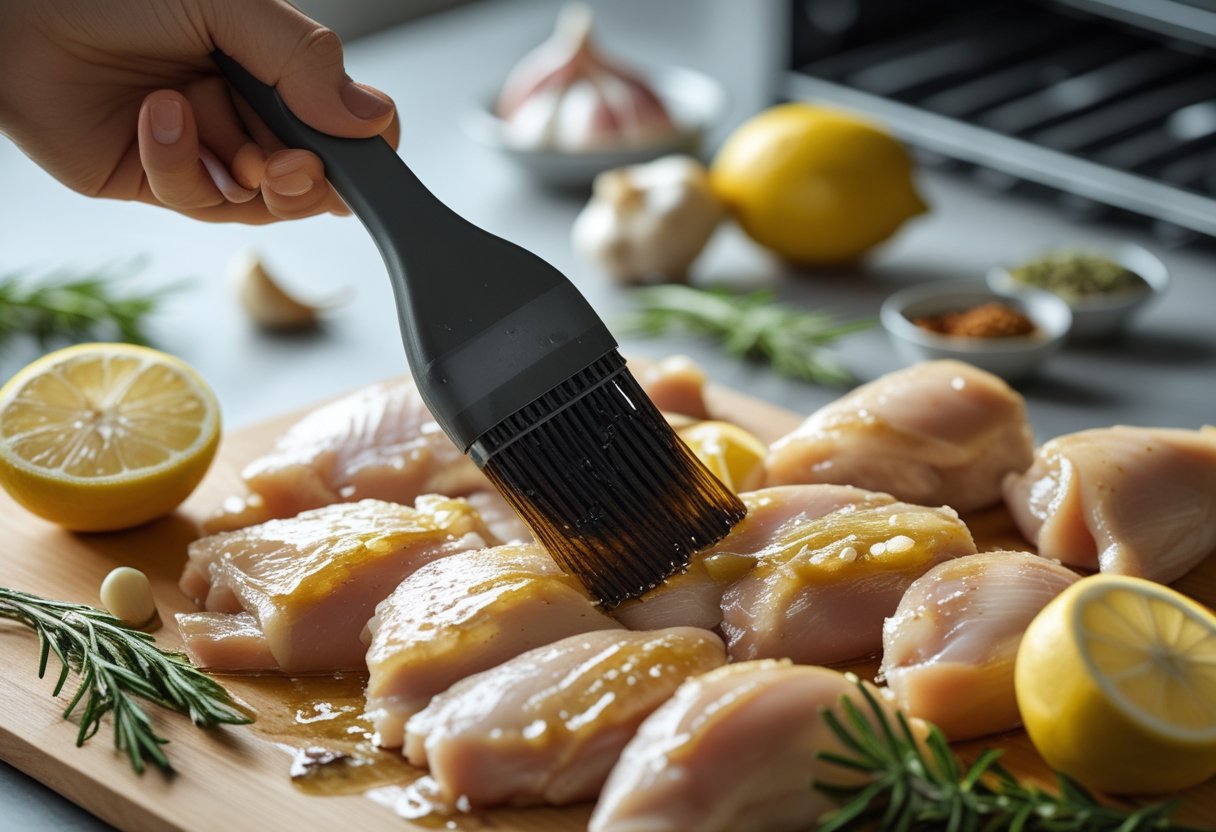
Brining and marinating both add moisture and flavor before the chicken cooks. They work differently, though, and knowing when to use which makes prep less of a guessing game.
Dry Brining Vs Wet Brining
Dry brining is just rubbing coarse salt on the chicken and letting it rest, uncovered, in the fridge for at least an hour. The salt pulls out some moisture, then the meat reabsorbs it along with the salt, seasoning the meat and helping it hold on to juices during cooking.
Wet brining means soaking the chicken in water, salt, and usually a little sugar for one to twelve hours. According to grilling techniques experts, this is extra helpful for boneless cuts since it pushes moisture into the muscle fibers. Rinse and pat dry before grilling to avoid an overly salty surface.
How A Chicken Marinade Helps
A good marinade adds flavor and keeps the surface tender over direct heat. The oil in the marinade also helps prevent sticking.
Acidic ingredients like lemon juice or vinegar soften the outer layer, but too much acid for too long can make the texture mushy. So keep marinating under 24 hours.
Simple Marinade Recipe For Better Browning
Try this: olive oil, fresh lemon juice, minced garlic, dried oregano, salt, and black pepper. Go with about three parts oil to one part acid.
The oil helps with caramelization, while the acid keeps the surface from getting tough. Marinate boneless breasts for at least 30 minutes, or up to 8 hours for more flavor.
Set Up Your Grill For Gentle, Even Cooking
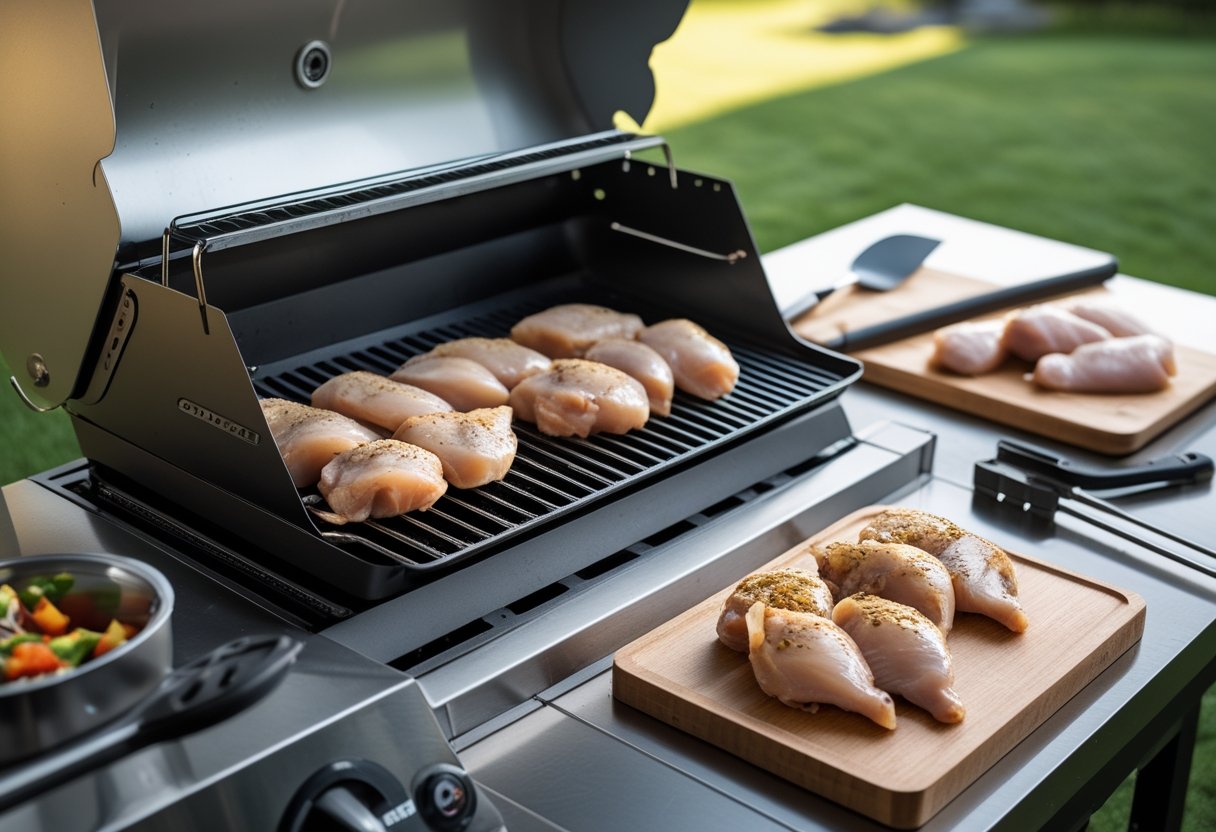
Heat setup is where most home grillers lose control. The right grill temperature and a two-zone setup let you sear and finish without blasting the meat the whole time.
Best Grill Temperature For Chicken
The sweet spot for chicken is between 375°F and 450°F on the direct heat side. That’s hot enough for grill marks and browning, but not so hot that you burn the outside before the inside cooks through.
Preheat your grill for 10 to 15 minutes before adding anything. A cold grate causes sticking and uneven searing, which means you lose surface moisture right away.
Direct Vs Indirect Heat
Direct heat means the chicken sits straight over the flame or coals. It’s great for searing and color, but direct heat by itself will overcook the outside of thick pieces before the inside is safe.
Indirect heat means the chicken sits away from the flame and cooks more like in an oven. As expert grilling guidance points out, combining both gives you a seared outside and a gently cooked, juicy inside.
Two-Zone Setup On Gas And Charcoal Grills
On gas, turn one set of burners to medium-high and leave the other side off. On charcoal, pile your coals on one side, leaving the other clear.
This gives you a hot zone and a cooler zone. Start the chicken on the hot side for color, then move it to the indirect side to finish cooking. That way, you can bring up the internal temperature slowly and avoid dryness.
Cook To Temperature, Not To Time
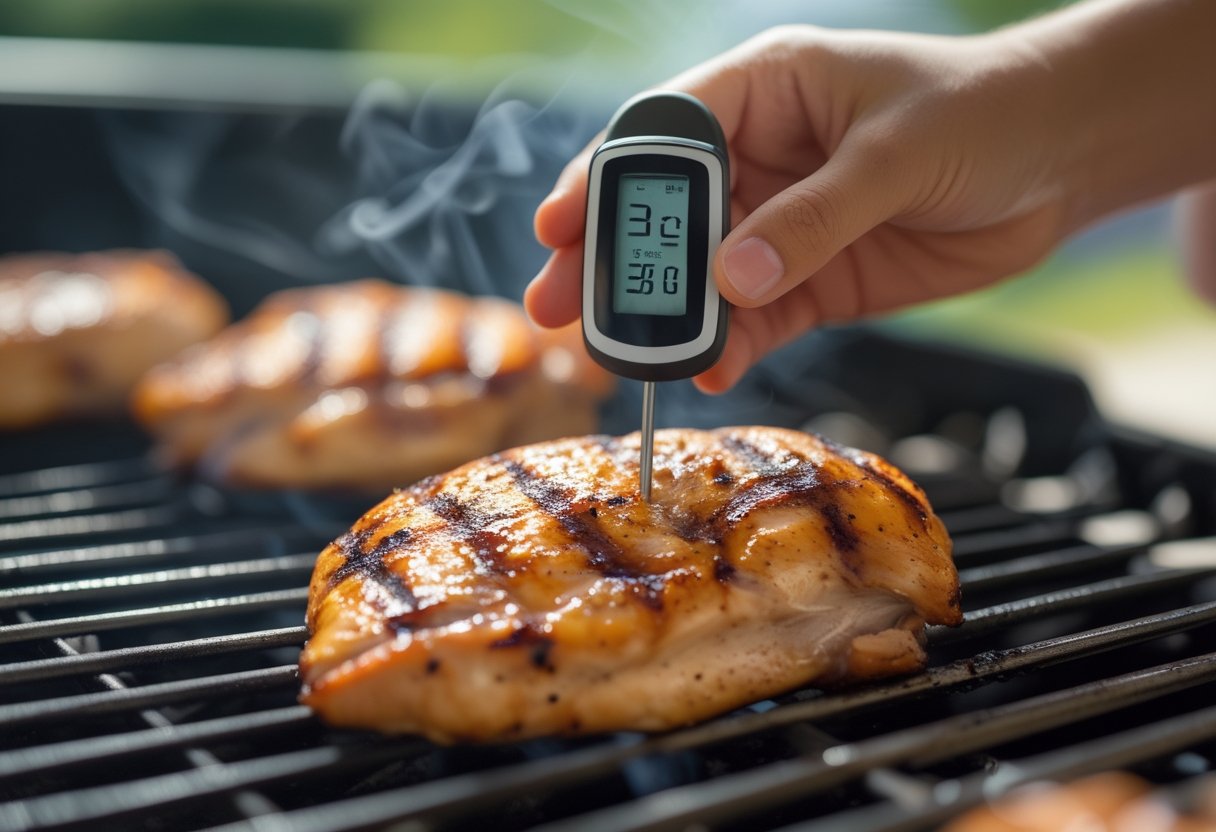
Cooking by time is one of the main reasons grilled chicken ends up dry. Every piece is a different size and temperature, so the same cook time won’t work every time.
Why You Should Use A Meat Thermometer
Using a meat thermometer takes out the guesswork. Stick it in the thickest part, away from bone, and you’ll know exactly what’s going on inside.
An instant-read thermometer is honestly the most useful tool for getting reliable results. According to delightfulmomfood.com, a wireless thermometer is extra handy—you can check temps without opening the grill and letting heat escape.
Pull Temperatures For Breasts And Dark Meat
For breasts, pull the chicken off when the thickest part hits 160°F. Carryover cooking will bring it up to the USDA-safe 165°F as it rests.
If you pull at 165°F, it’ll probably end up at 168-170°F, which is noticeably drier. For thighs and drumsticks, the pull temperature is also 160°F, but they can go a little higher without drying out because of the extra fat.
How To Tell When Chicken Is Done Without Cutting It Open
No thermometer? Check for clear juices. Pierce the thickest part—if juices run clear, not pink, it’s close to done.
The texture should feel firm but not rock-hard when you press it. Try to avoid cutting chicken on the grill, since it releases moisture. If you have to check, make one small cut at the thickest point.
Small Technique Fixes That Prevent Dryness
Some little technique tweaks during the cook make a bigger difference than people expect. These small adjustments can be the difference between juicy chicken and the usual dry disappointment.
When To Flip And When To Move Off Direct Heat
Flip the chicken breast once after 4 to 5 minutes on the direct heat side, or when it releases from the grate without sticking. If you try to flip too soon, the surface tears and moisture escapes.
Once you see color on both sides, move the chicken to the indirect zone. As The Wooden Skillet describes, cook on direct heat for about 8 to 10 minutes total, flipping halfway, then finish over indirect heat for another 5 to 7 minutes.
This method finishes the center gently and keeps the outside from drying out.
Why Resting Matters Before Slicing
When you pull chicken off the grill, the muscle fibers are still tight from the heat. Resting for 5 to 10 minutes lets them relax and soak up juices that moved to the center while cooking.
If you cut in right away, those juices just run out onto the board instead of staying in the meat. A quick rest on a plate, loosely covered with foil, makes all the difference.
Common Mistakes That Dry Out Chicken Fast
- Pressing down on the chicken with a spatula while it cooks
- Moving the chicken around constantly instead of letting it sear
- Cooking on maximum heat the entire time with no indirect zone
- Skipping the rest period and slicing immediately after pulling
- Relying on a clock instead of a thermometer for doneness
These mistakes each pull moisture from the chicken at different points. Just fixing a couple of them can really change your results.
Serve It While It Is Still At Its Best
Good technique gets you juicy chicken, but serving and storing it right keeps it that way. A few easy choices at the table protect all your hard work.
What To Serve With Grilled Chicken
Pick sides that let grilled chicken shine. Classic pairings like grilled corn, a simple green salad, roasted potatoes, or coleslaw work well.
They're easy to time with the chicken and hold up while the meat rests. For something lighter, try sliced grilled chicken over grain bowls, pasta, or a chopped salad with vinaigrette.
If you used a citrusy marinade, lean into those flavors with your sides. No need to overthink it—just keep things balanced.
Best Ways To Slice And Use Leftovers
Always slice against the grain for tender bites. For breasts, the grain runs lengthwise, so cut across the width at a slight angle.
Leftover grilled chicken keeps well in an airtight container in the fridge for up to four days. To reheat, use a low oven at 300°F, covered with foil to keep it moist, and add a splash of broth or water.
Or honestly, cold leftover chicken is great shredded into sandwiches, wraps, or soups. No need to reheat at all sometimes.
Frequently Asked Questions
What temperature should chicken breast be grilled at for the best results?
Aim for a grill surface temperature between 375°F and 450°F on the direct heat side. This range browns the chicken nicely without burning the outside before the inside cooks through.
Set up a two-zone grill so you can finish the chicken gently over indirect heat. That way, you get juicy results without risk.
How long should chicken breast be grilled at 350°F?
At 350°F, a boneless chicken breast pounded to even thickness usually takes about 10 to 14 minutes total. Flip once halfway through.
The exact time depends on thickness, so use a meat thermometer and pull the chicken when it hits 160°F inside. Don't just trust the clock.
How can I grill chicken on a gas grill and keep it from drying out?
Set one side of the burners to medium-high and leave the other side off for a two-zone setup. Sear the chicken on the hot side for a few minutes per side, then move it to the cooler side to finish.
Pull it at 160°F and let it rest for 5 minutes before slicing. That short rest really helps keep it juicy.
What internal temperature should grilled chicken reach to be safe to eat?
The USDA says chicken is safe at 165°F. In practice, you can pull chicken breast off the grill at 160°F because carryover cooking brings it up to 165°F while it rests.
This tweak keeps the meat safe and noticeably juicier. It's a little detail, but it matters.
How can I keep grilled chicken warm without it drying out?
Tent the chicken loosely with foil after grilling and let it rest on a warm plate or cutting board. If you need to hold it longer than 10 minutes, put it in a low oven at around 170°F, covered with foil.
Don't seal it tight, though—trapping steam softens the surface. A little airflow keeps the texture just right.
What are the most common mistakes to avoid when grilling chicken?
People often rely only on direct heat for the whole cook, which can dry out the chicken. It’s tempting to cut into the meat to check if it’s done, but that’s a classic blunder.
Not using a thermometer? That’s another big one. Folks also skip the rest period or toss chicken on the grill straight from the fridge, especially when the pieces aren’t even in thickness.
DISCLAIMER
This document is provided for general information purposes only and should not be relied upon as providing legal advice, technical, or specific operational guidance to the reader, whether as to the practices described in the document or the applicable legal requirements and regulations. outdoorgrillguide.com expressly disclaims any responsibility for liability arising from or related to the use or misuse of any information in this document.


